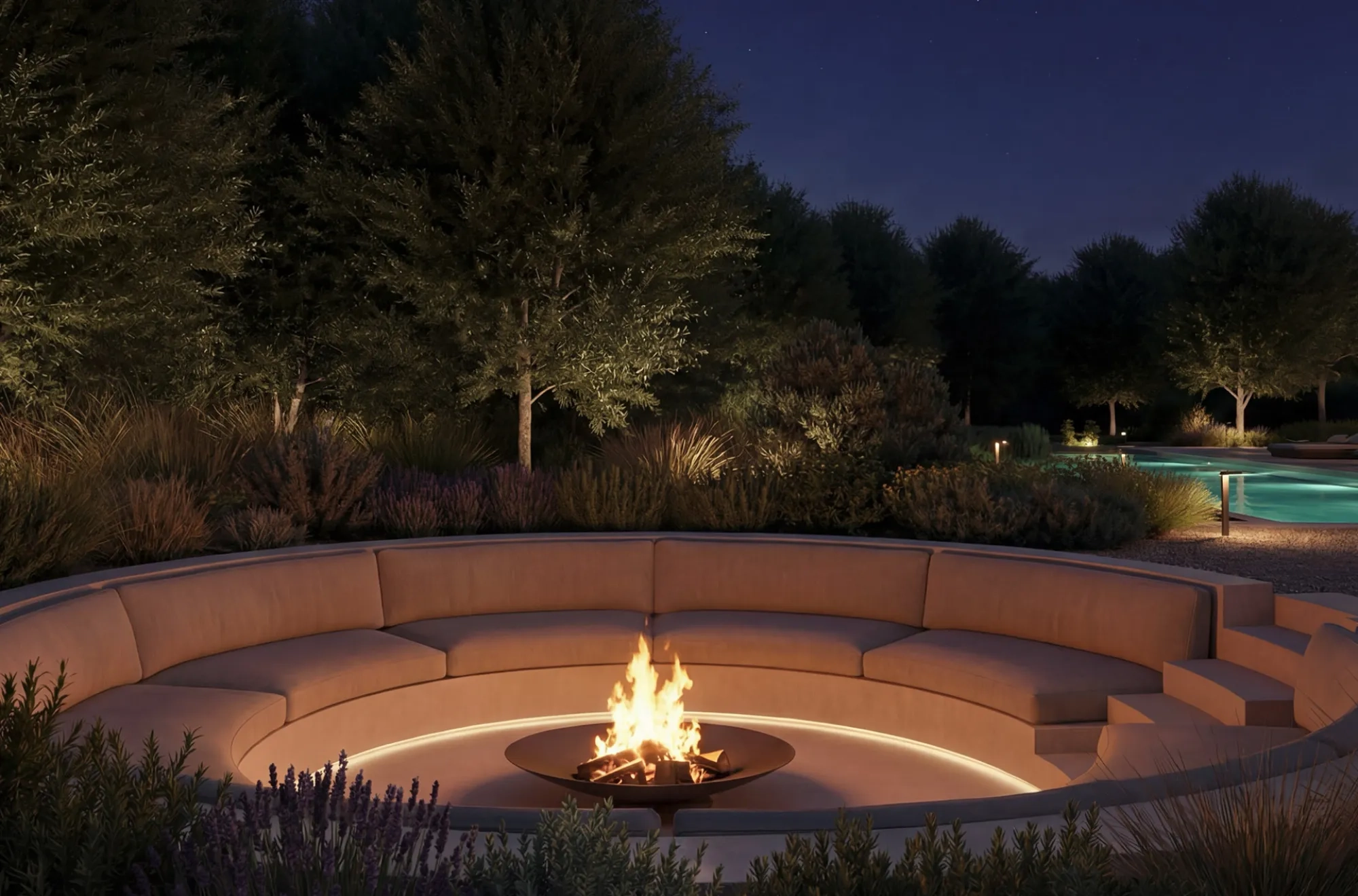
A seaside garden
Date
2025-2027
Location
Alicante (Spain)
Type
Residential
Trees
21
Area
3.000 m²
Status
Concept
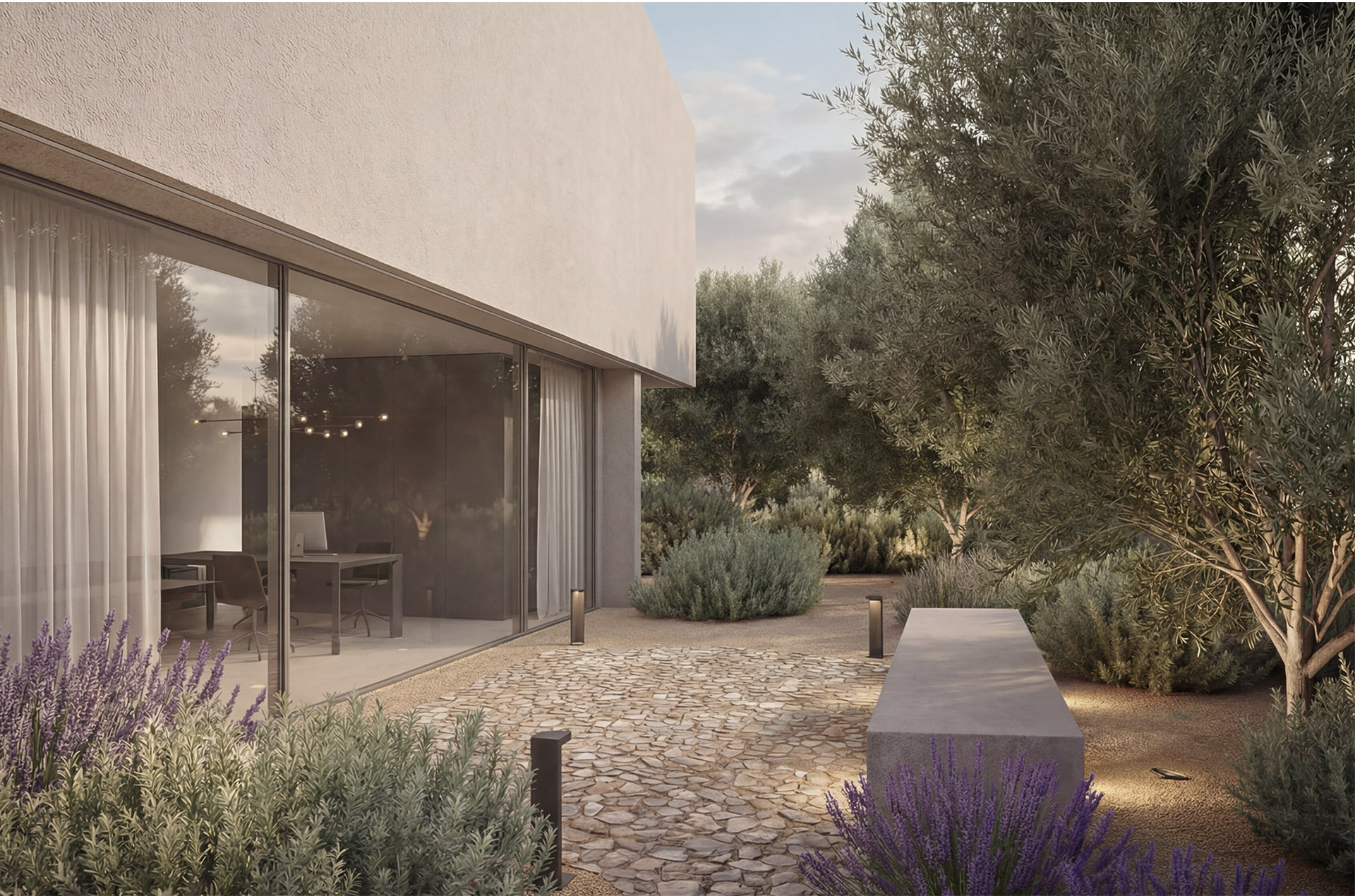
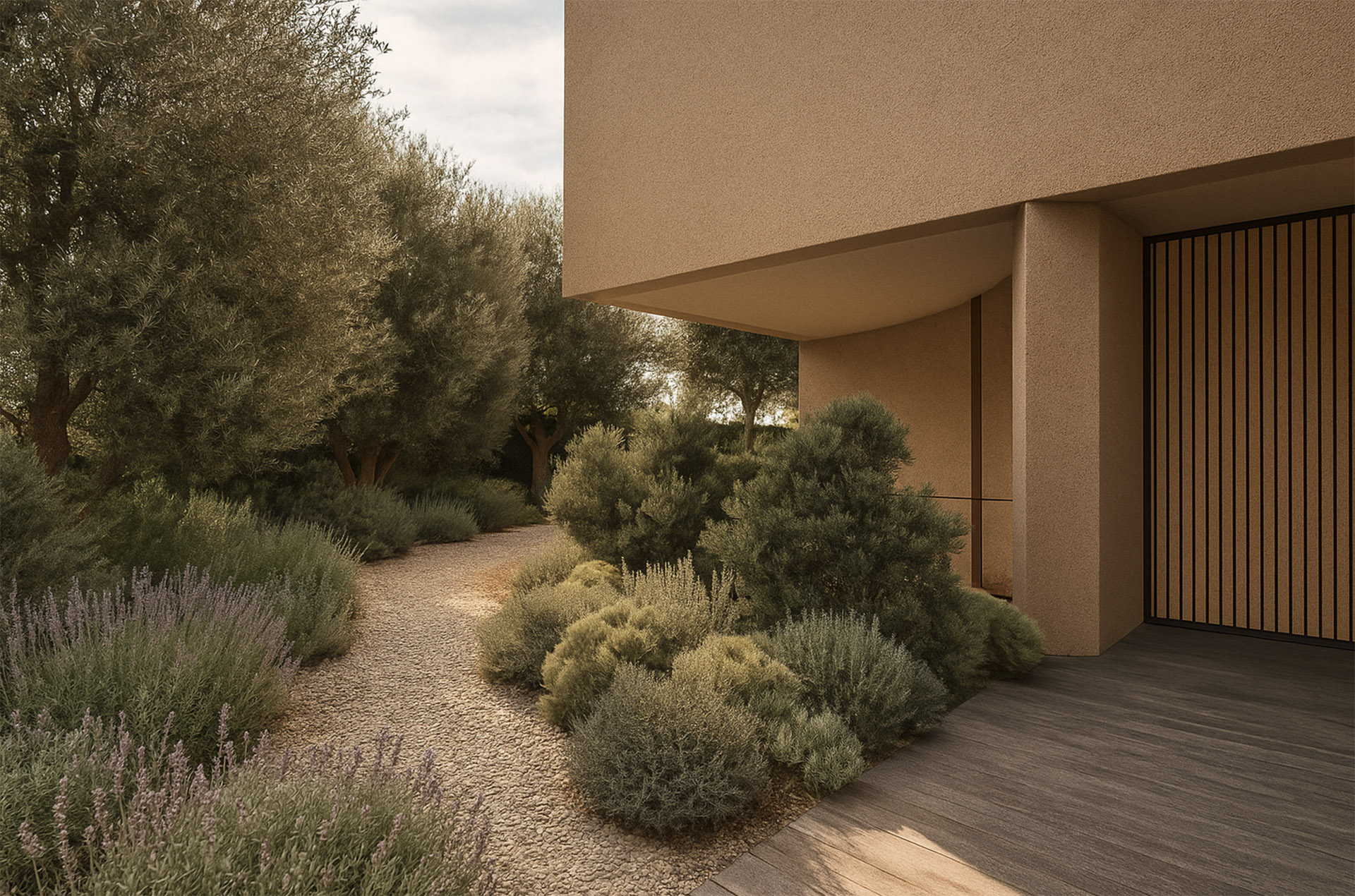
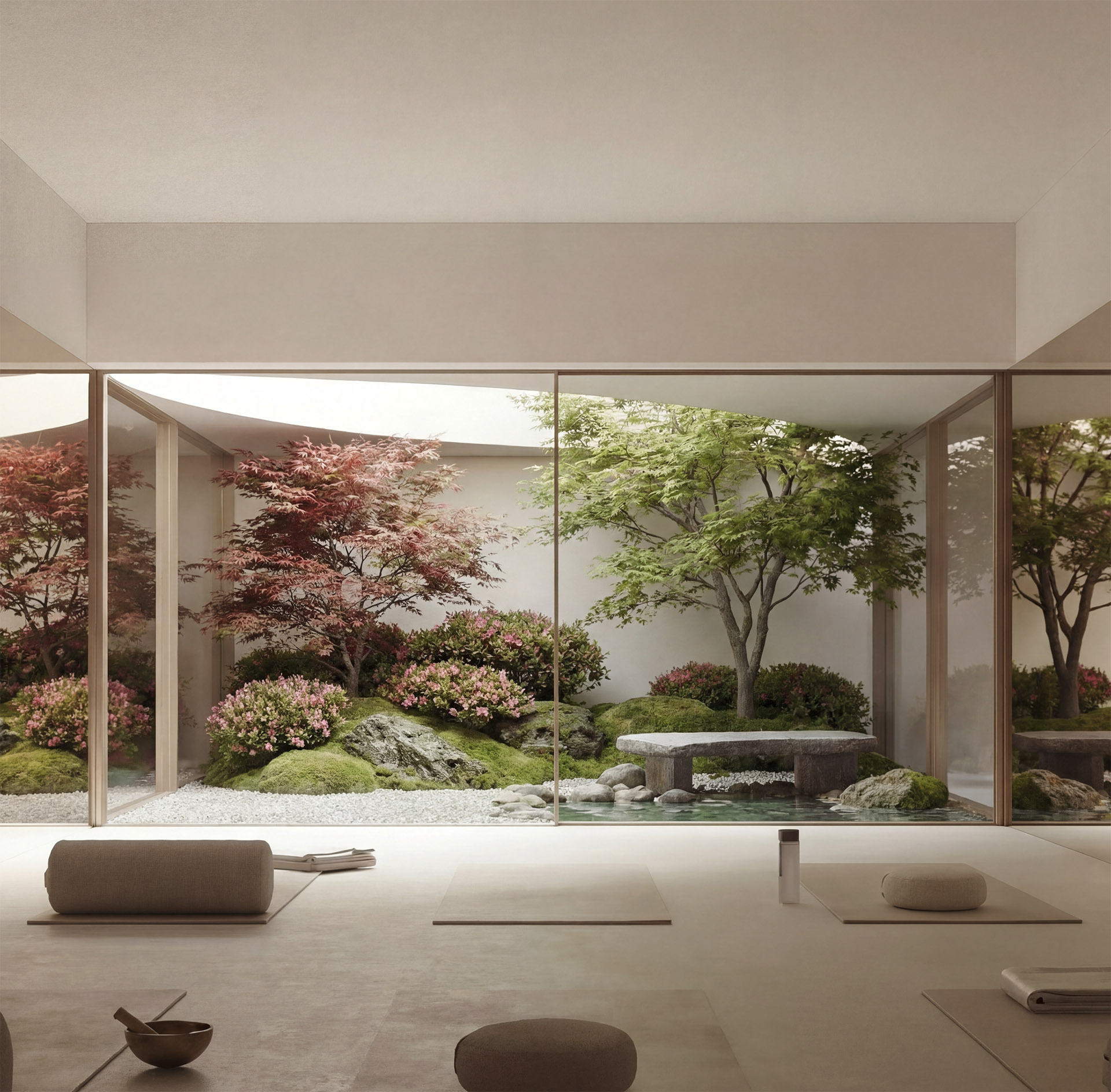
Our proposal seeks to structure the exterior through a sequence of spaces that dialogue with the architecture and accompany the natural paths of the garden. The result is a serene and well-articulated landscape, where materials, vegetation, and geometry integrate naturally. A garden conceived to extend the interior life towards the outdoors, reinforcing the identity of the whole and offering a stable, luminous, and fully Mediterranean setting.
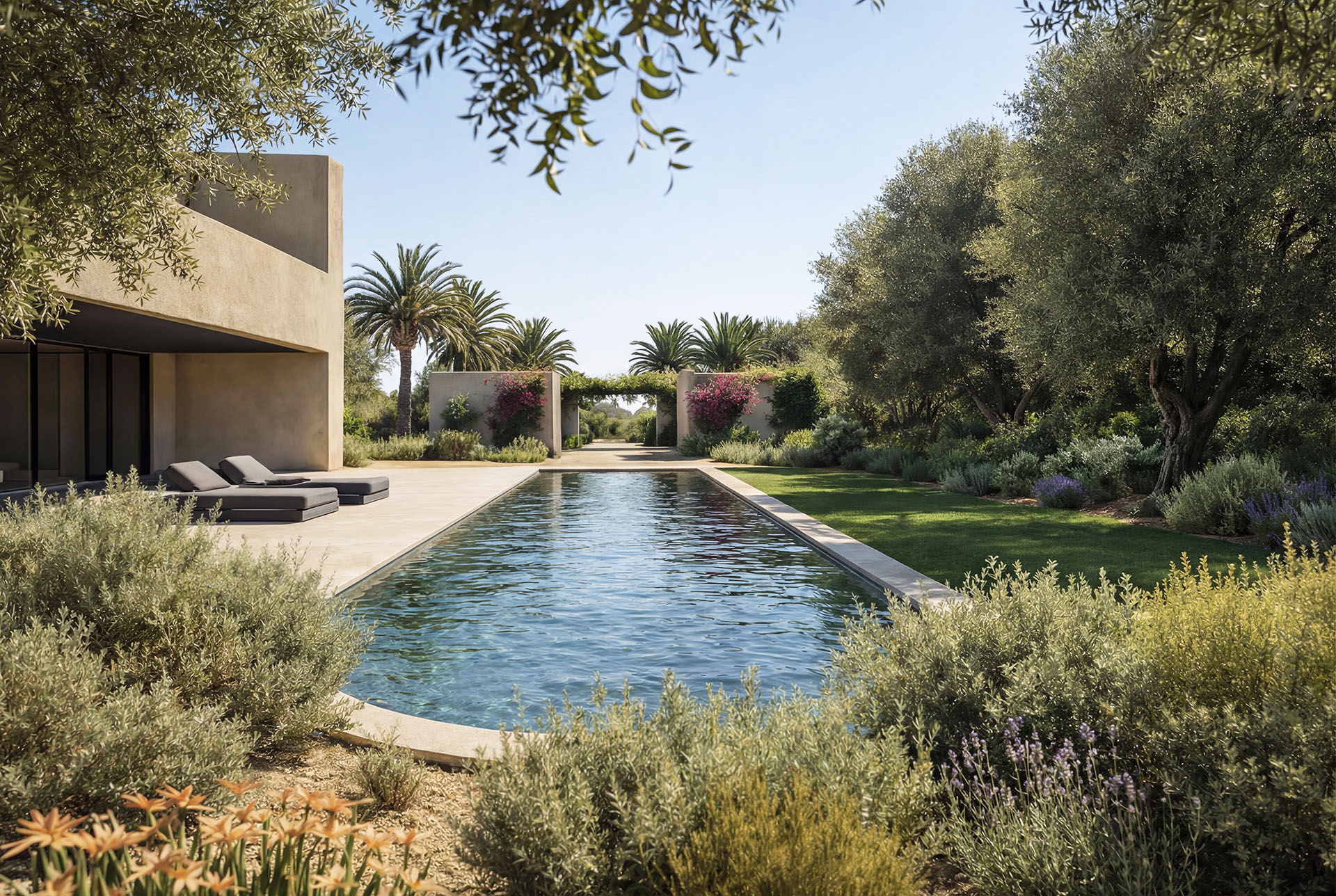
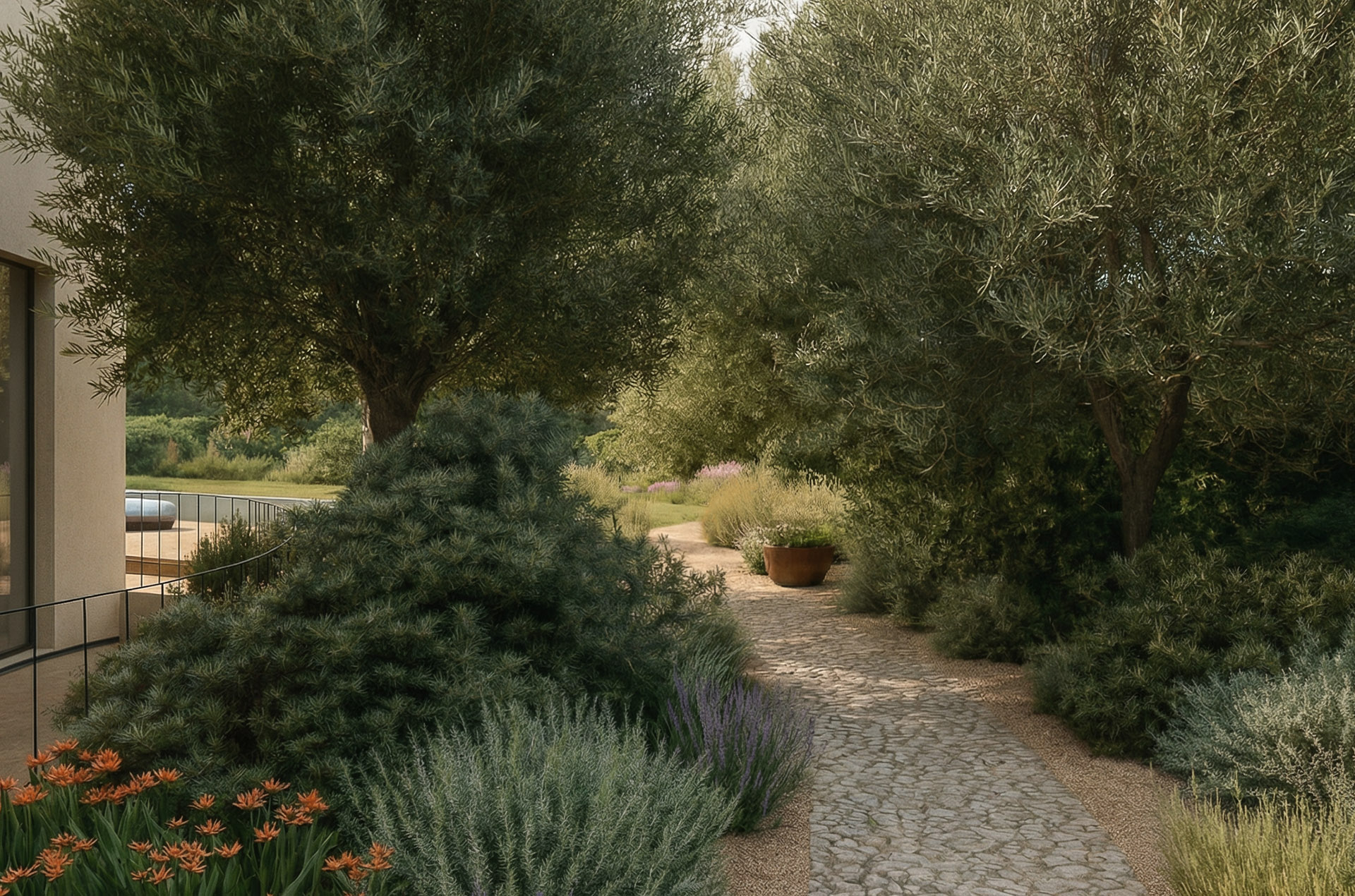
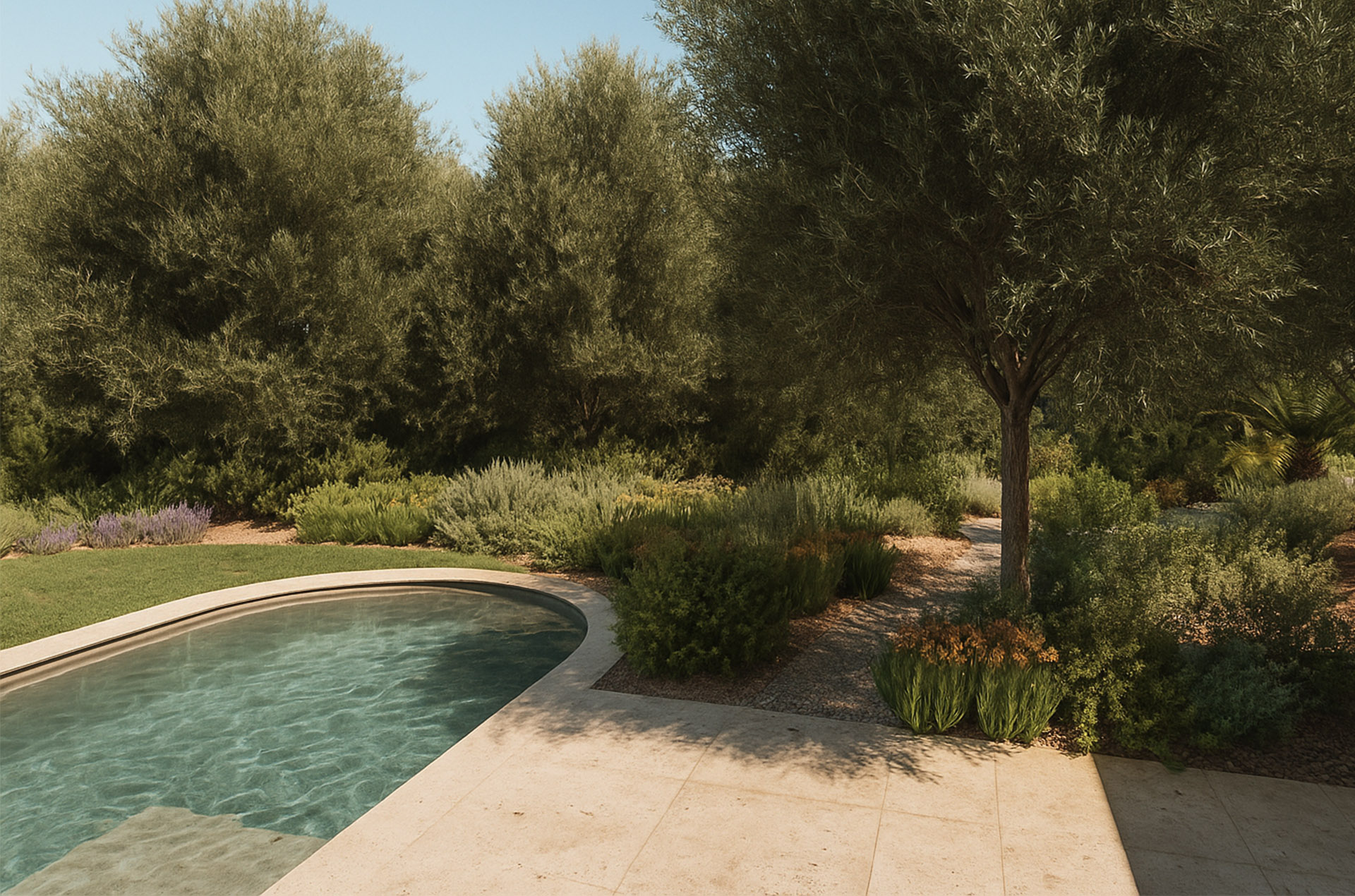
GEOMETRY AND STRUCTURE OF THE GARDEN
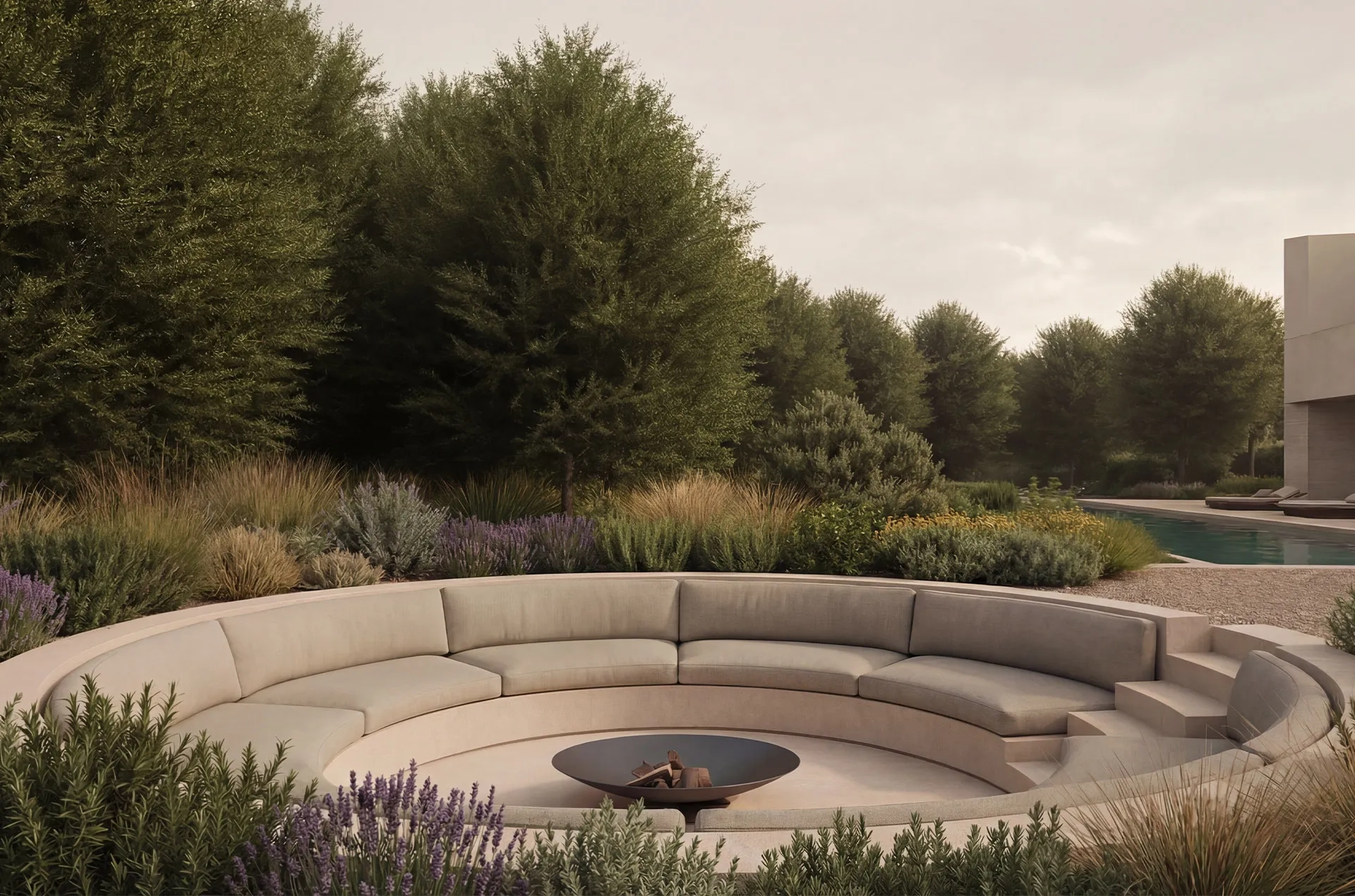
The garden is organised through a clear geometric structure that articulates the plot along two main directions: a longitudinal axis that organises circulation and living areas, and a transversal axis that connects the different outdoor spaces. Both axes meet in a central circular space that acts as a point of inflection and a natural distributor of the whole. This geometry does not simply organise access or visual connections, but also allows the hierarchy of uses, the establishment of clear transitions, and the definition of the scale of the different environments within the garden.
The circle functions as a structuring void, an open space that creates continuity between shaded areas, sunbathing spaces, circulation routes, and areas dedicated to leisure or rest. Around it unfolds a sequence of green surfaces, permeable pavements and Mediterranean plantings that follow the logic of these axes, reinforcing the unified reading of the project. This geometric strategy ensures an ordered, legible and flexible landscape, where each space finds its place in relation to the whole and to the way the plot is inhabited.
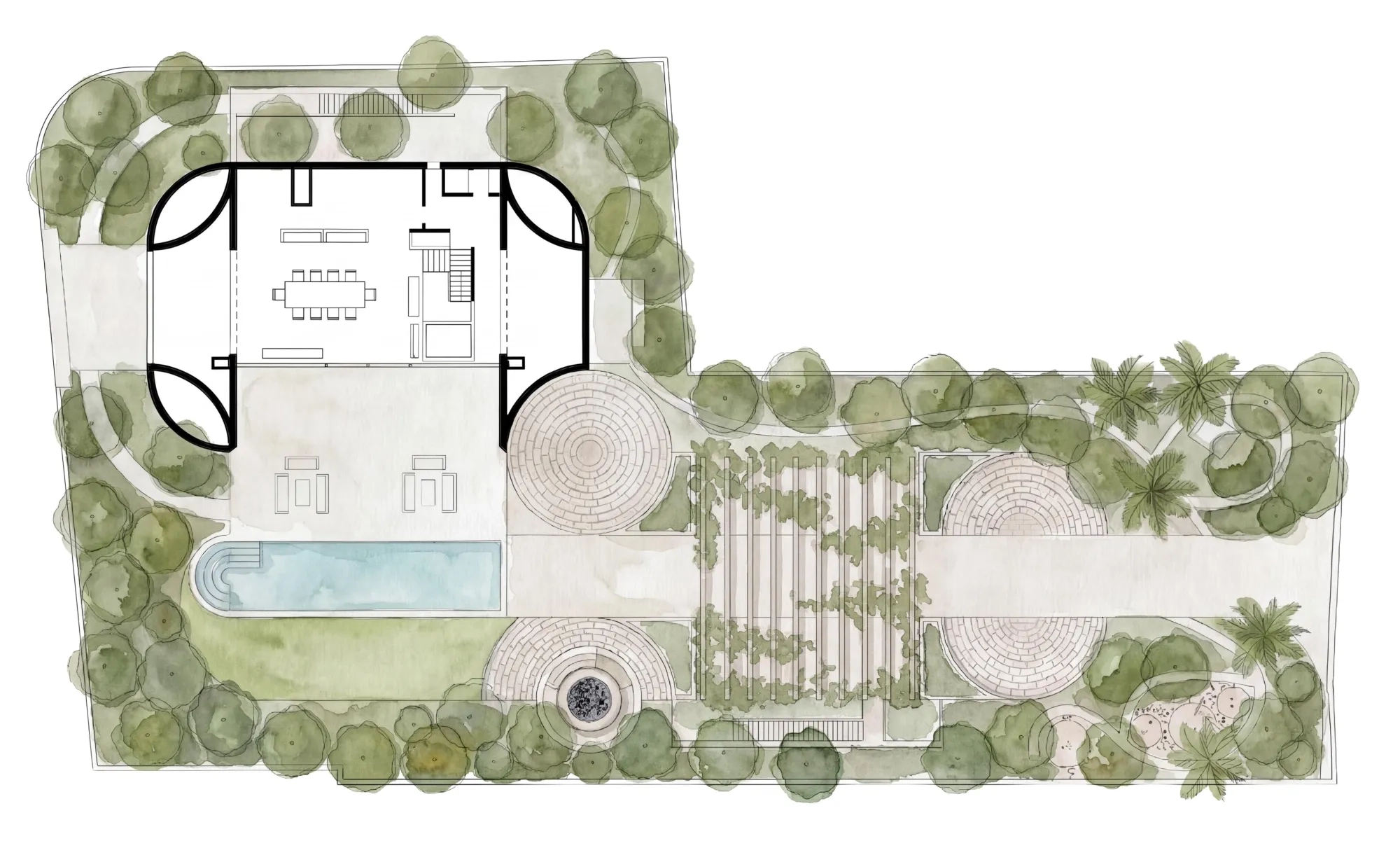
The landscape project is conceived as a natural extension of the architecture, working with a strictly Mediterranean palette and a vegetal structure that provides freshness, shade and seasonality without losing order or clarity. The plot preserves a valuable group of large palm trees —some exceeding 15 metres in height and forming part of the historical identity of the place— which will be carefully transplanted and relocated within the garden itself to ensure their survival and reinforce the vertical presence of the composition. On this existing base, the project introduces a botanical collection of bougainvilleas, selected in different species and colours to define the areas of the garden: reds and fuchsias are reserved for specific points where intensifying visual energy is appropriate, while orange, sepia, yellow and white tones are distributed across broader or transitional areas to create a calmer chromatic rhythm. At the same time, the selection of Mediterranean plants —shrubs, perennials and groundcovers resistant to the coastal environment— organises the different atmospheres of the solarium, the seating areas, the children’s spaces and the paths that run through the plot.
The pavements follow this same principle of natural integration. Permeable paving stones are used, laid with open joints that allow groundcover vegetation to appear between them. Depending on the width of these joints, the paving defines different uses: tighter joints for the main paths, wider separations for living areas and transitional spaces where vegetation can grow more freely. This system allows the differentiation of spaces without resorting to abrupt changes in materiality, creating a continuous, porous and quiet garden in which the pavements are read as part of the vegetal substrate. In this way, architecture, vegetation and materials converge within the same language, capable of articulating the two main axes of the project and reinforcing the idea of a living, ordered and deeply Mediterranean garden.
THE ARCHITECTURE
The architecture of the project, developed by Balzar Arquitectos, establishes the siting and main volume of the house through curved lines and a spatial organisation that seeks a direct relationship with the outdoors. The house is oriented towards the southeast to maximise natural light and open the living spaces towards the pool area and the surrounding exterior spaces. The curves soften the presence of the building and favour a fluid transition between the interior and the plot, generating porches, thresholds and intermediate spaces that enrich everyday experience. One of the most distinctive elements of the project is the incorporation of a circular outdoor space that functions as a point of articulation between the house and the secondary pavilion. This void helps structure the perception of the ensemble and introduces a recognisable geometric gesture. The architecture relies on values such as formal clarity, spatial continuity and natural integration with the surroundings, establishing a solid foundation upon which the garden is developed.