A contemporary reinterpretation of the English garden
Date
2026-2027
Location
Madrid (Spain)
Type
Residential
Trees
30
Area
3.000 m²
Status
Concept
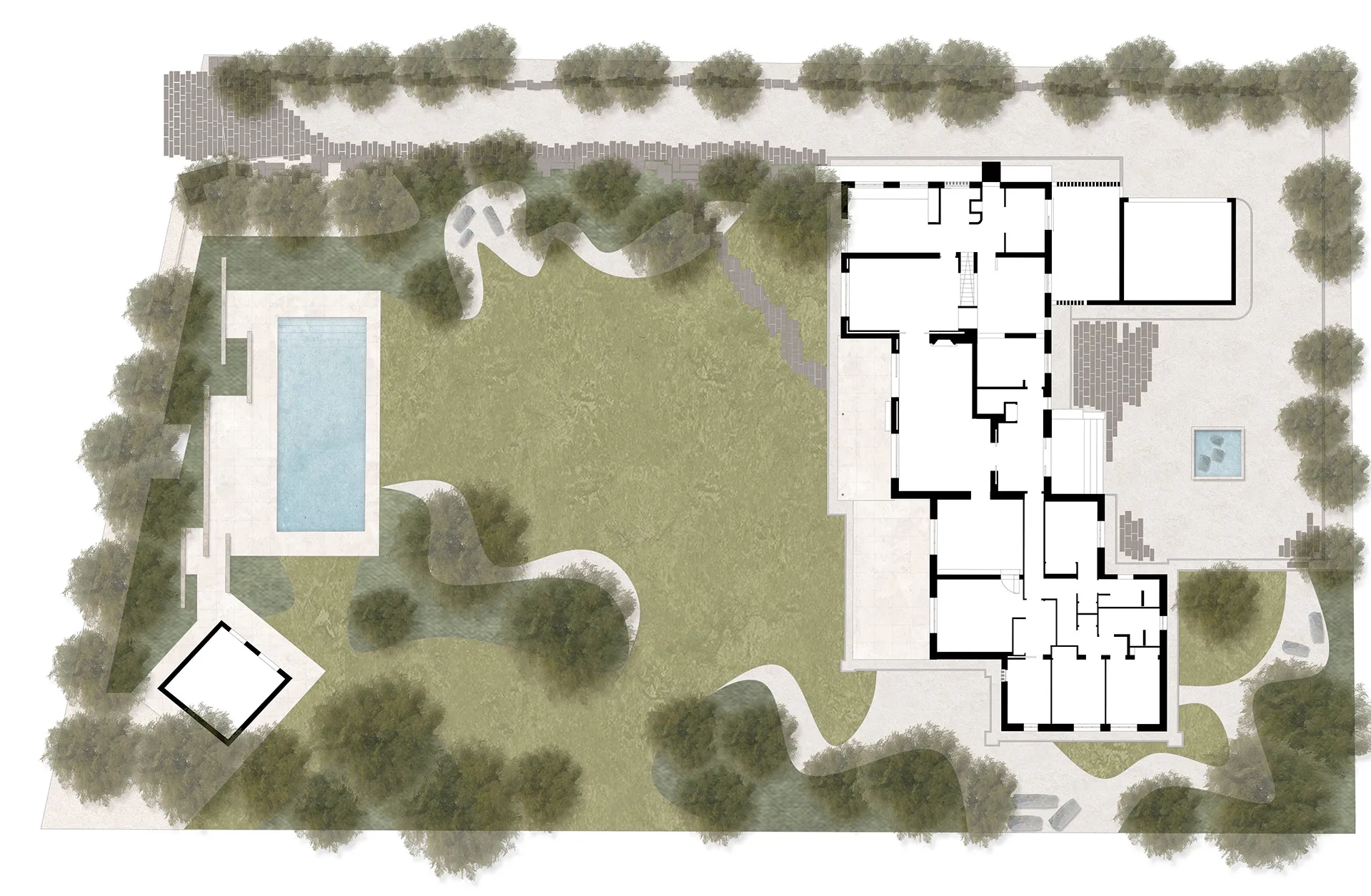
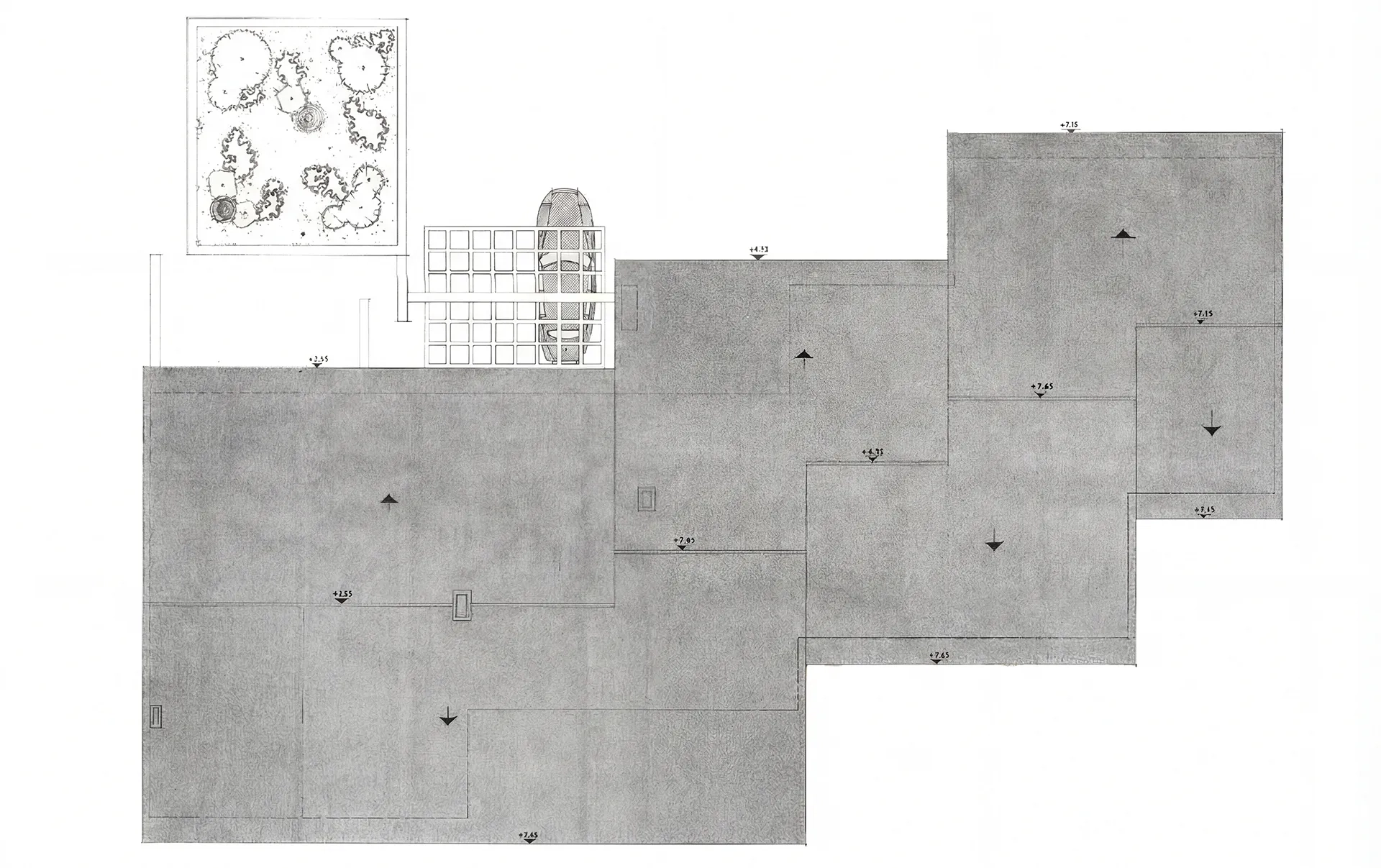
Located in Somosaguas (Madrid), this project begins with a 1960s house of great architectural coherence, resolved on a single storey and deeply connected to the land. The study of the original documentation made it possible to recover unbuilt decisions and to understand the spatial logic with which the house was conceived. From this reading, the garden is envisioned as a contemporary reinterpretation of the English romantic landscape: a space where movement, topography and materiality create a serene and timeless atmosphere.
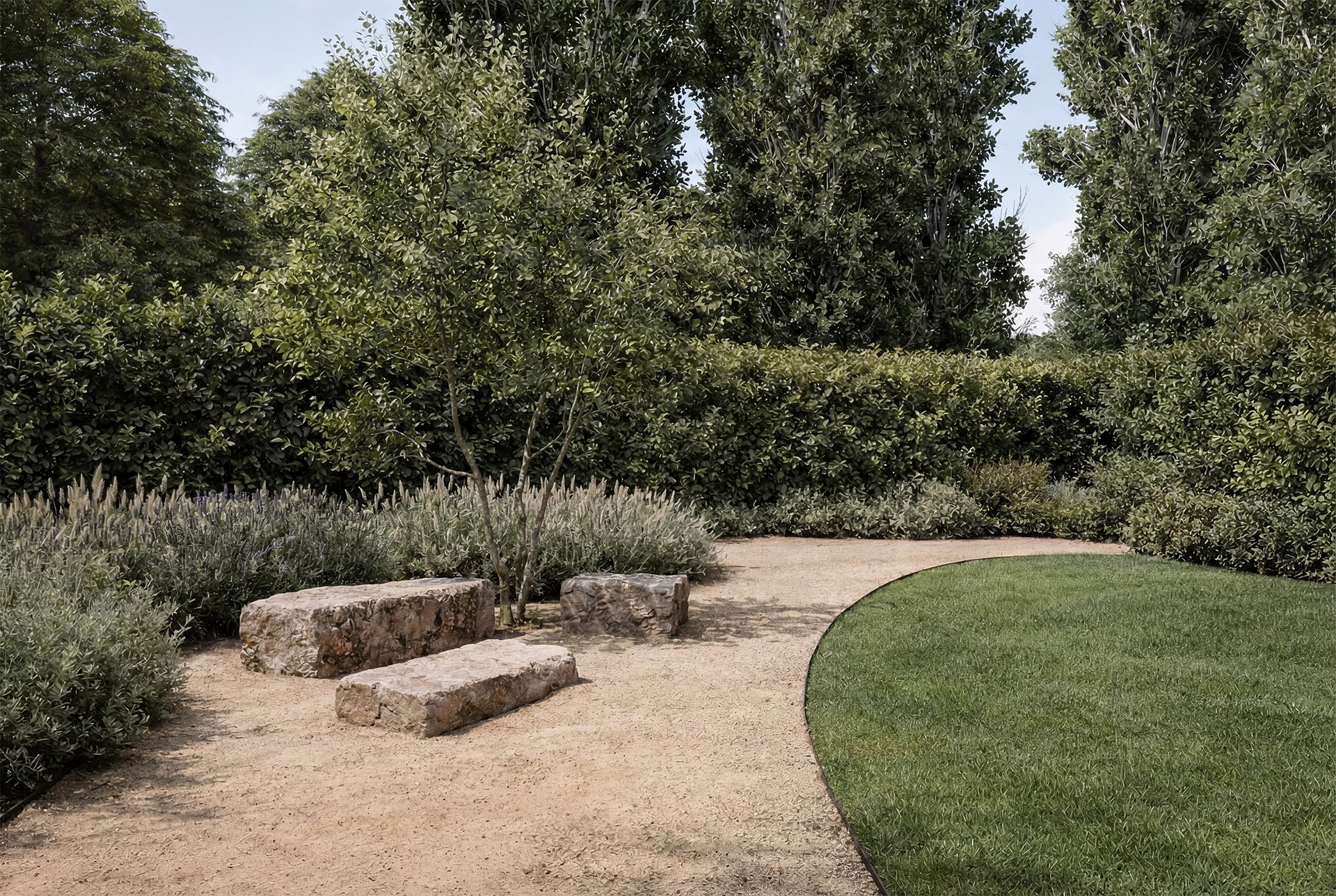
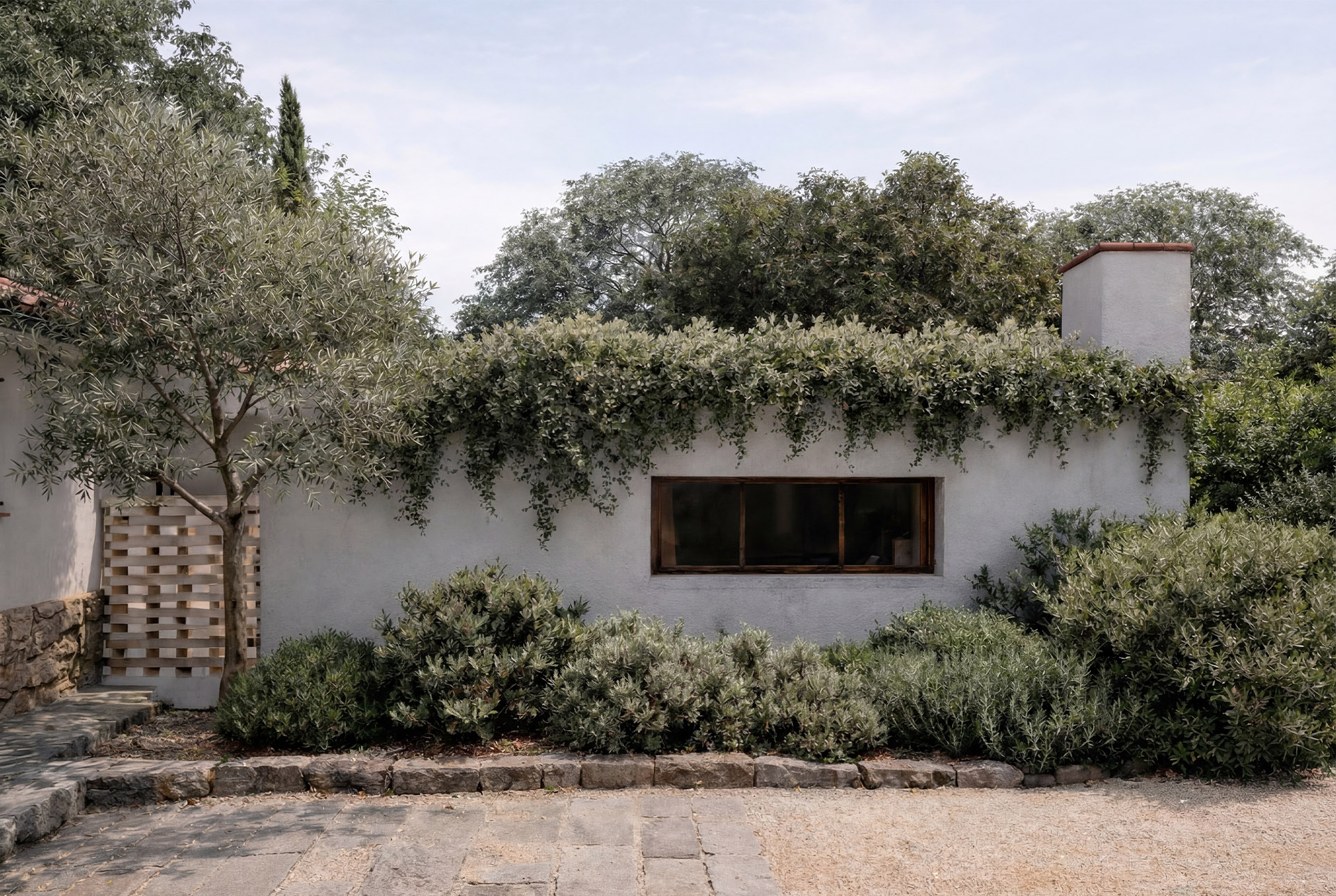
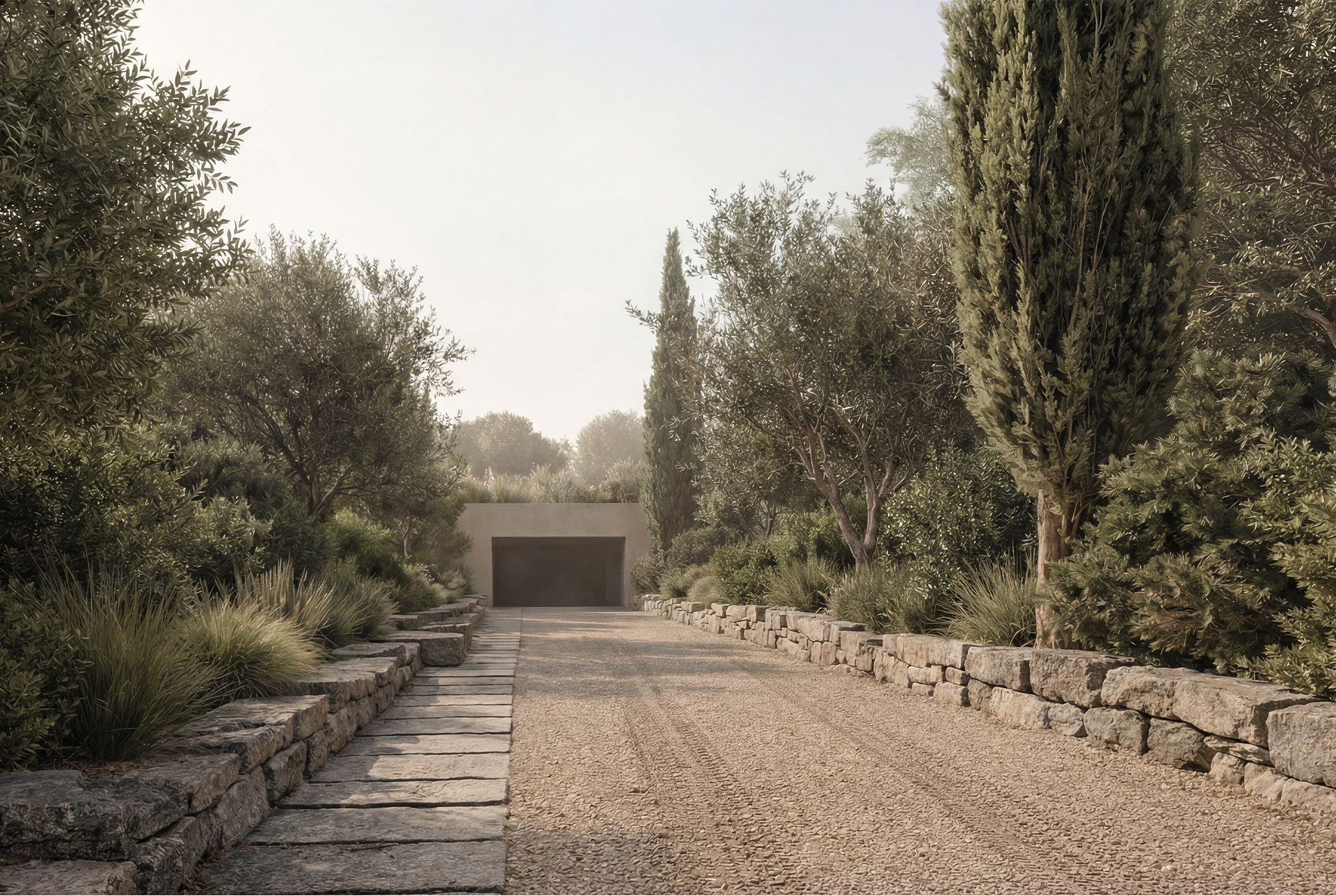
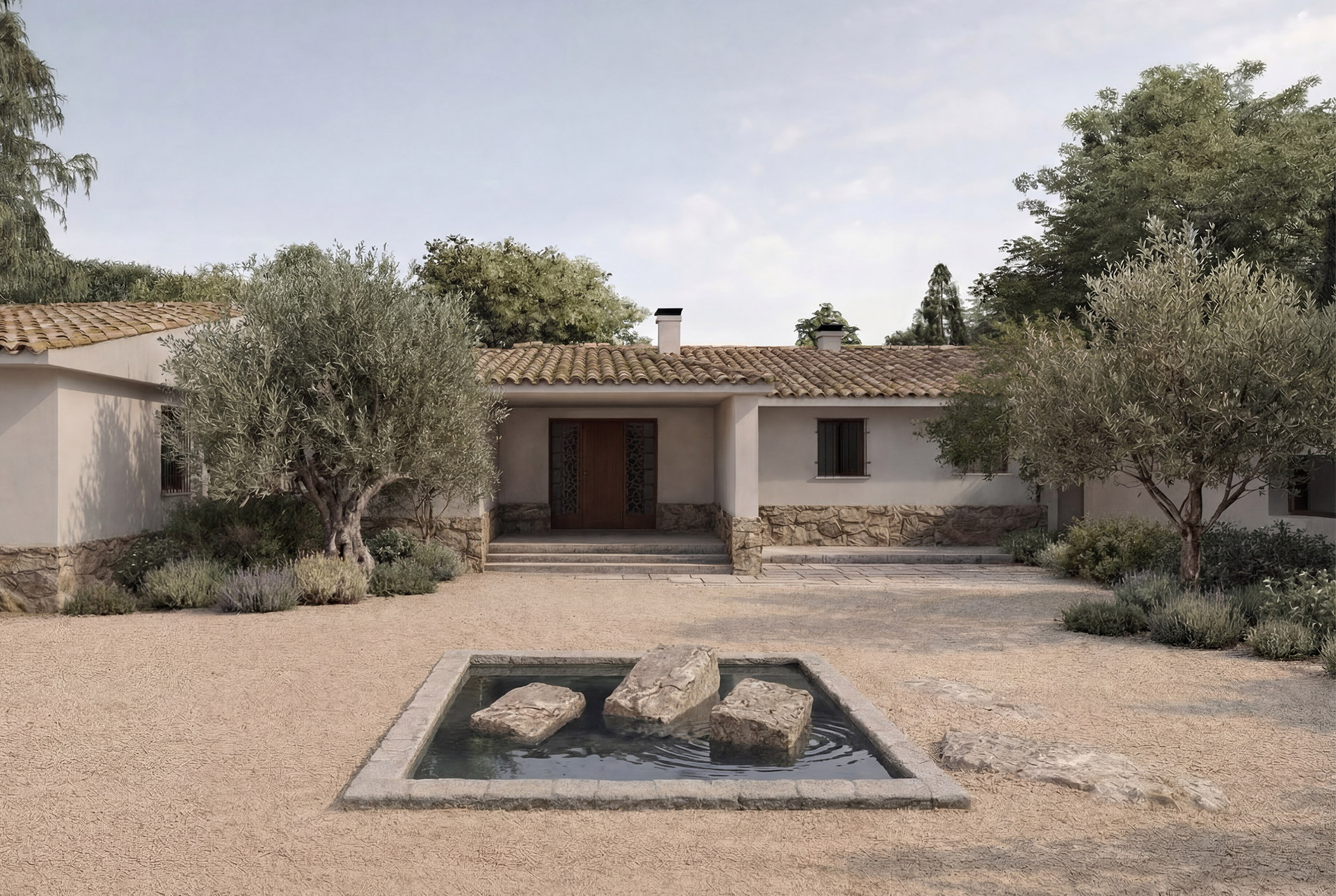
The approach to the house unfolds along a compacted gravel path that deliberately replaces asphalt. This decision is not merely aesthetic: it responds to a desire for permeability, respect for the existing root systems, and coherence with the character of the project. The route leads to the main façade, where a roundabout with a granite fountain has been designed. Water appears as the central element, contained within a clear geometry and built with the same material logic as the rest of the garden: solid blocks, carved stone, elements that seem as though they have always belonged there.
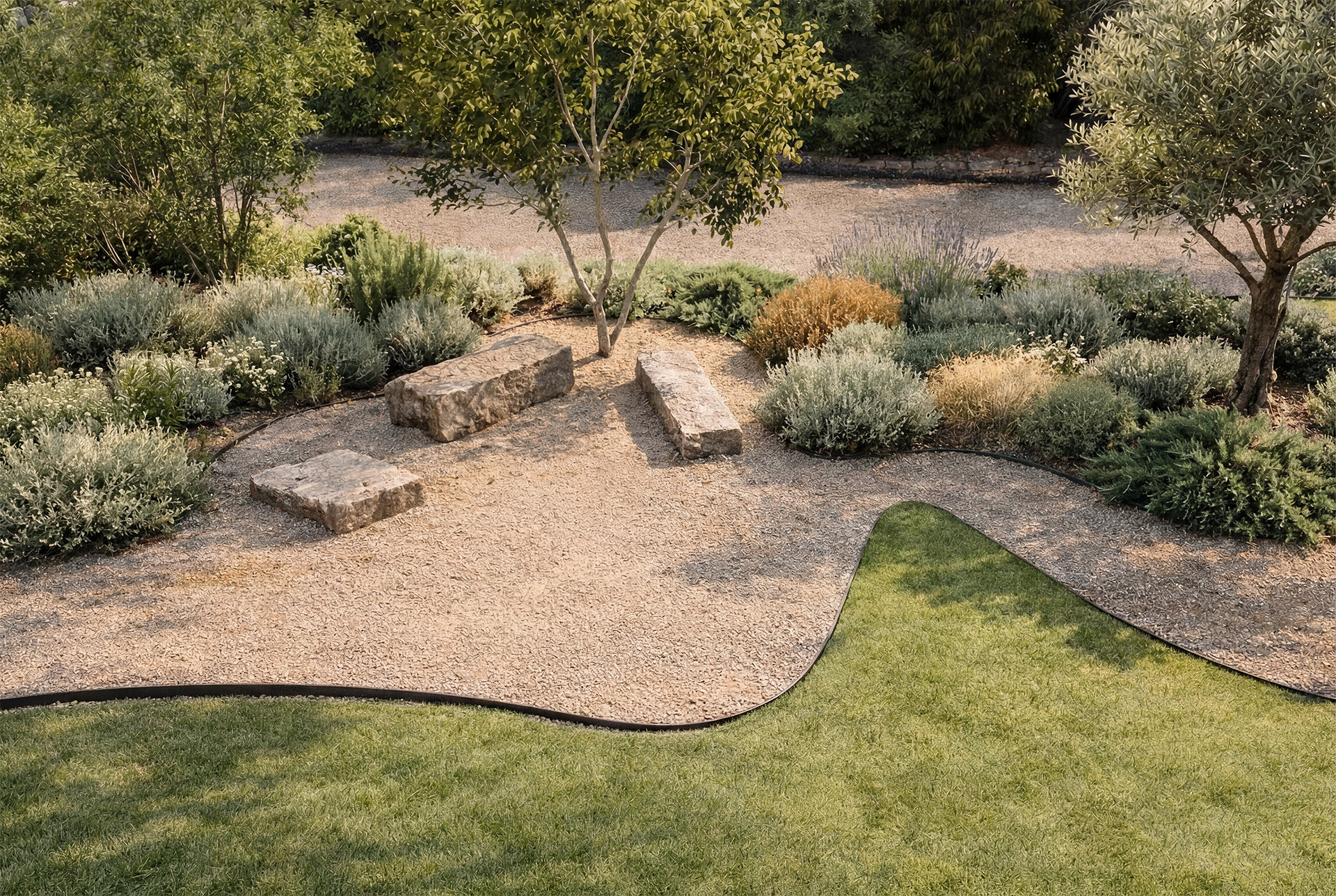
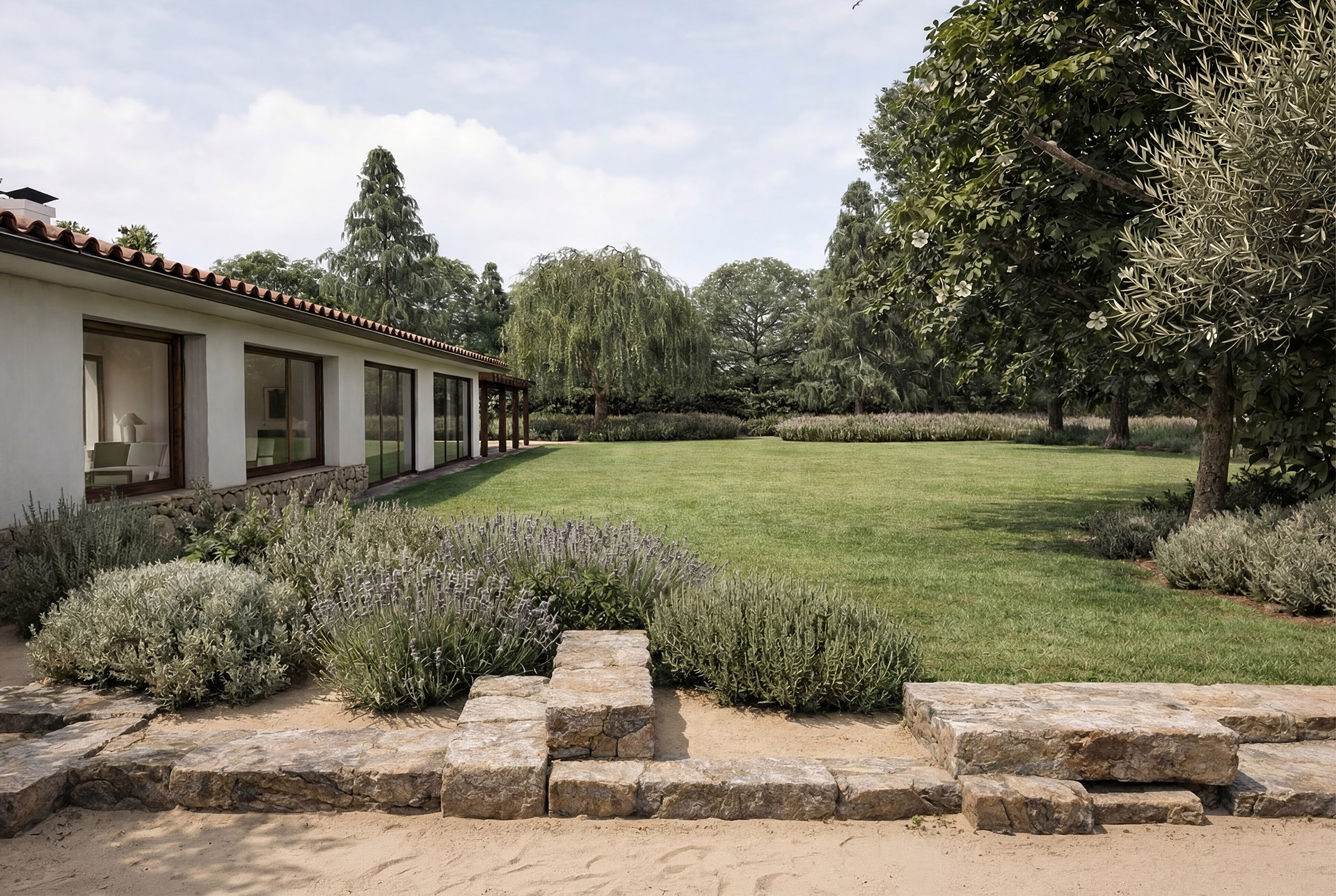
One of the fundamental gestures of the project was the significant reduction of lawn surfaces. This was not only for reasons of sustainability and maintenance —constant principles in our work— but also for conceptual coherence. The garden moves away from the uniform carpet of grass and instead embraces a more dynamic and structural reading of the landscape.
The idea of romantic decay —not as abandonment, but as atmosphere— is introduced through the vegetation. The garden is structured primarily with grasses and Mediterranean species, which bring lightness and a changing aesthetic throughout the year. Dry textures, movement with the wind and seasonal tones construct that sense of time in transition.
THE GARDEN AS A TEMPORAL LAYER
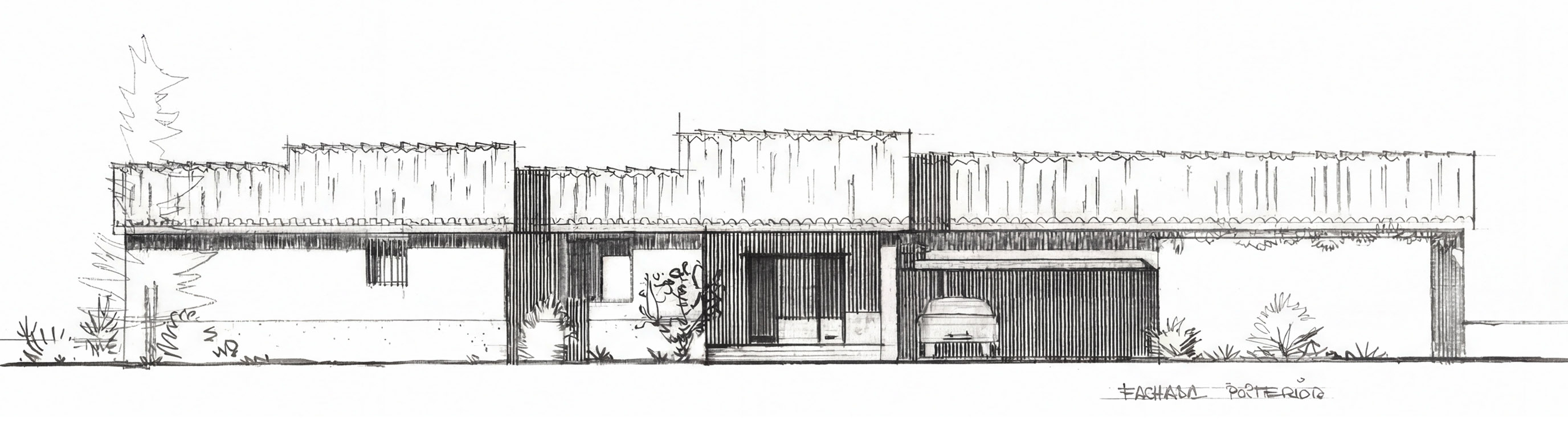
The project begins with a clear premise: not to impose itself upon the architecture, but to enter into dialogue with it. The house, built in the 1960s, possesses a coherence and serenity characteristic of its time. Intervening in its surroundings therefore required an attitude of respect and attentive listening.
The study of the original drawings revealed decisions that were never executed —a green roof over the garage, certain exterior areas that had been planned but never built— which now reappear as opportunities to complete the narrative of the place. Rather than adding, the project seeks to recover and reinterpret.
The garden is thus understood as a temporal layer: a contemporary intervention that does not seek to erase what came before, but to add to it. It neither competes with the house nor eclipses it; it accompanies it. The work is guided by the idea of the passage of time, of materials that age with dignity, of constructions that seem as though they have always been there.
Stone becomes the primary language. Carved granite, solid blocks, pieces that function simultaneously as retaining elements, benches or sculptural forms. Some surfaces are worked with almost archaeological precision; others are placed as fragments, as if they were remains of an earlier structure. The aim is not to manufacture nostalgia, but to suggest memory.
The pool and the new living areas are integrated according to the same logic: clear geometries, honest materials and a restrained presence that does not alter the original reading of the ensemble. The result is neither a historical reconstruction nor a strident contemporary gesture, but continuity.
The garden does not seek to appear old. It seeks to appear inevitable.
ABOUT WILLIAM KENT
William Kent (1685–1748) was one of the great pioneers of the English landscape garden of the eighteenth century. An architect, painter and stage designer before becoming a garden designer, he understood landscape as an artistic composition, almost theatrical, where architecture and nature entered into dialogue within the same scene.
In contrast to the geometric rigor of the formal Baroque garden, Kent introduced a new sensibility: freer paths, carefully constructed perspectives and the deliberate incorporation of architectural elements within the landscape. Classical temples, bridges, porticos or ruins were not mere ornaments, but narrative devices. The garden ceased to be an ordered space and became an emotional experience.
 | In places such as Stowe or Rousham, Kent developed the concept of the folly —those architectures that appear ancient or incomplete— as an essential part of the garden’s narrative. The ruin was not an accidental remnant, but a deliberate construction that evoked memory, time and permanence. The landscape was conceived as a three-dimensional painting, where each element contributed to a particular atmosphere. His work laid the foundations of what would become known as the “English garden”, decisively influencing later generations of landscape designers. More than designing parterres or planting trees, Kent introduced an idea: that the garden could become a scenography of time. |
Oil on canvas by William Aikman (1682 - 1731)