Restoration of the gardens at Sánchez Villa Palace
Research led by Daniel Valera will guide the restoration of the estate’s historic gardens as part of the wider project to rehabilitate the palace.
Date
May 2026
Type
News
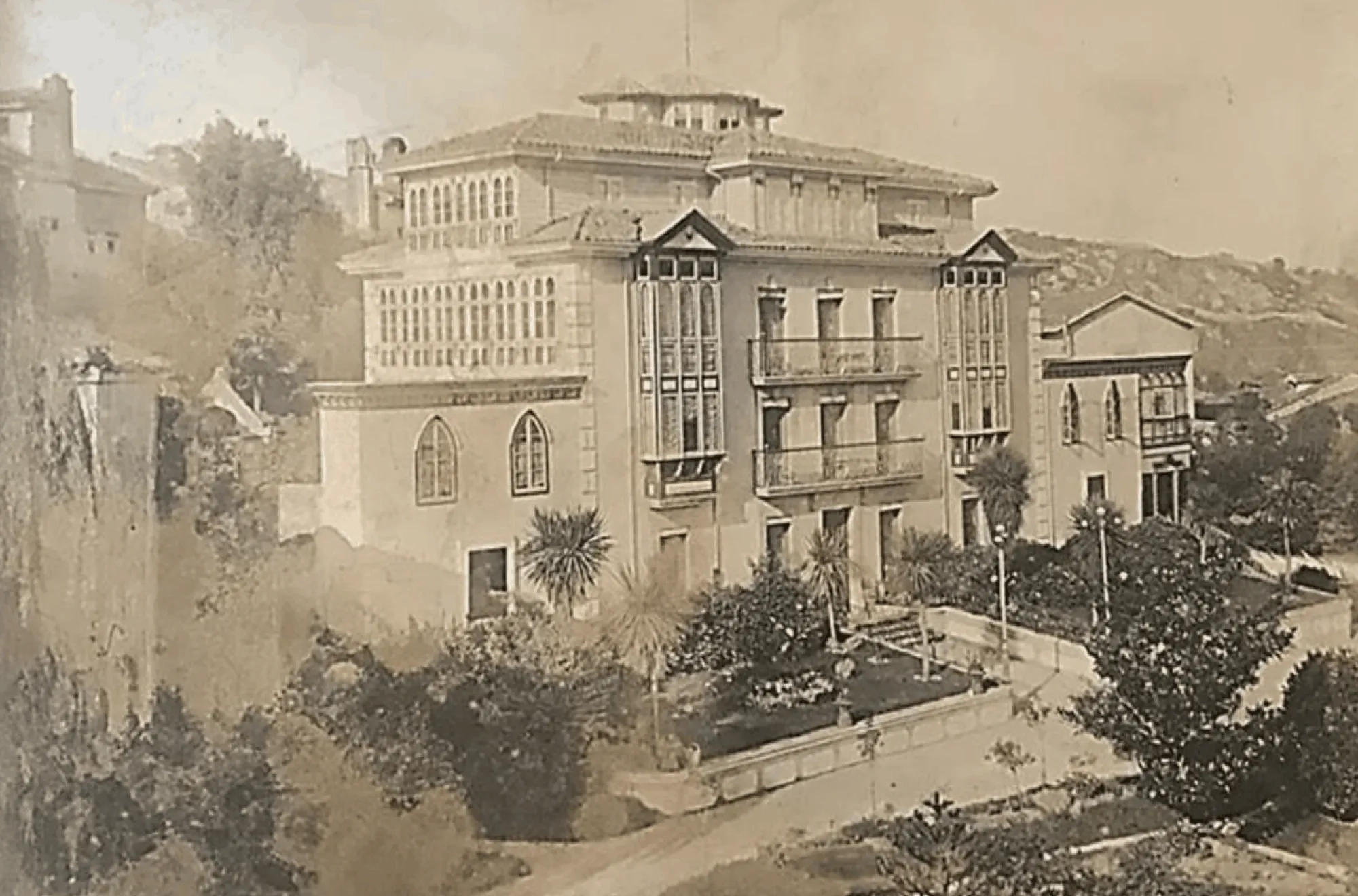
DSTUDIO has been selected to research the history of the gardens at Sánchez Villa Palace and lead their restoration. The palace and its grounds form one of the most distinctive heritage sites in Llanes.
The commission is part of a wider project to rehabilitate the palace and its surroundings. We will study how the estate has evolved, identify traces of its past that survive in the landscape and develop a proposal to re-establish the historic relationship between the buildings, the garden and the wider landscape.
For Daniel Valera and the team at DSTUDIO, this commission brings both professional recognition and a sense of responsibility. Working on a historic garden begins with understanding its origins, how it has changed and the role it played in the architectural ensemble.
A historic estate known by several names
Sánchez Villa Palace stands in the El Cuetu neighbourhood of Llanes. The estate is also known as the Palacio de los Sánchez Ramos and the Palacio de los Sánchez Ezquerra, names that reflect the families associated with the property at different points in its history.
The Cultural Heritage Inventory of Asturias lists the estate under its official name, Casa de Sánchez Ramos y Capilla de Santo Domingo, with the reference IPCA-EI-36-050. It was formally added to the inventory in 2018 in recognition of its historical, architectural and cultural significance.
The property includes the main building, the Chapel of Santo Domingo, the estate’s boundary structures and the landscaped grounds that historically formed the setting for the palace and chapel. Together, these elements make up a single historic landscape.
Research before restoration
The first phase will combine documentary research with a study of the estate as it stands today.
We will locate and analyse historic photographs, maps, documents, plans and any accounts that help us trace the evolution of the gardens. We will cross-check this evidence against a measured survey of the estate in its current condition and a close examination of the features that survive on the ground.
The research will focus on the following aspects of the estate.
- The historic layout of entrances and routes through the grounds.
- The visual relationship between the garden, the palace and the chapel.
- The walls, boundaries and any other structures that may survive.
- The existing vegetation and individual specimens of particular interest.
- Areas once used for leisure, cultivation or formal occasions.
- Views towards the palace and out across the landscape of Llanes.
- Changes to the estate over recent decades.
The research will help us identify which features can be reinstated, which should be conserved and where a contemporary interpretation grounded in historical evidence is needed.
The garden as part of the estate’s heritage
A historic garden is more than an area of green space around a building. It is a cultural landscape shaped by planting, architecture, topography, water and paths, as well as by the memories of the people who lived there.
Trees, paths, views and the spaces that connect them reveal how an estate was used and how its architecture related to its surroundings. When these features disappear, the building loses an essential part of what gave it scale and meaning.
The restoration will seek to make the palace and gardens understandable as a whole again. Research will guide the design, helping us recover the coherence of the estate while avoiding a staged version of the past or a garden out of keeping with the history of the place.
A landscape restoration project
Once the documentary research is complete, we will develop a restoration proposal that balances heritage conservation with the present-day needs of the property.
The proposal will set out criteria for reinstating routes, spaces, planting and visual connections. It will also specify the measures needed to conserve historic vegetation wherever feasible.
Where an exact reconstruction is impossible, the design will interpret the available evidence. New elements must respond to the architecture and reveal the estate’s historic character without resorting to imitation that the evidence cannot support.
The experience of Daniel Valera and DSTUDIO
DSTUDIO’s selection for this commission reflects Daniel Valera’s experience in researching and restoring historic gardens.
As an agricultural engineer, landscape architect and researcher, Valera has devoted much of his work to understanding how Spanish gardens have evolved and how they relate to architecture, emigration and changes in the wider landscape.
At Sánchez Villa Palace, the studio will draw on this experience by bringing research, conservation and design together throughout the project.
The project opens a new chapter for an estate that suffered years of neglect and a fire in 2016. Its rehabilitation offers an opportunity to restore both the building and the landscape that gave it meaning.
For DSTUDIO, working at Sánchez Villa Palace is an opportunity to help conserve the heritage of Llanes and to show how historic gardens are inseparable from the architecture to which they belong.
Through the research and restoration now beginning, we hope to recover the unity and identity that the palace, its chapel and its gardens once shared within the landscape of El Cuetu.