A small garden
Date
2015
Location
Madrid (Spain)
Type
Urban
Trees
6
Area
100 m²
Status
Built
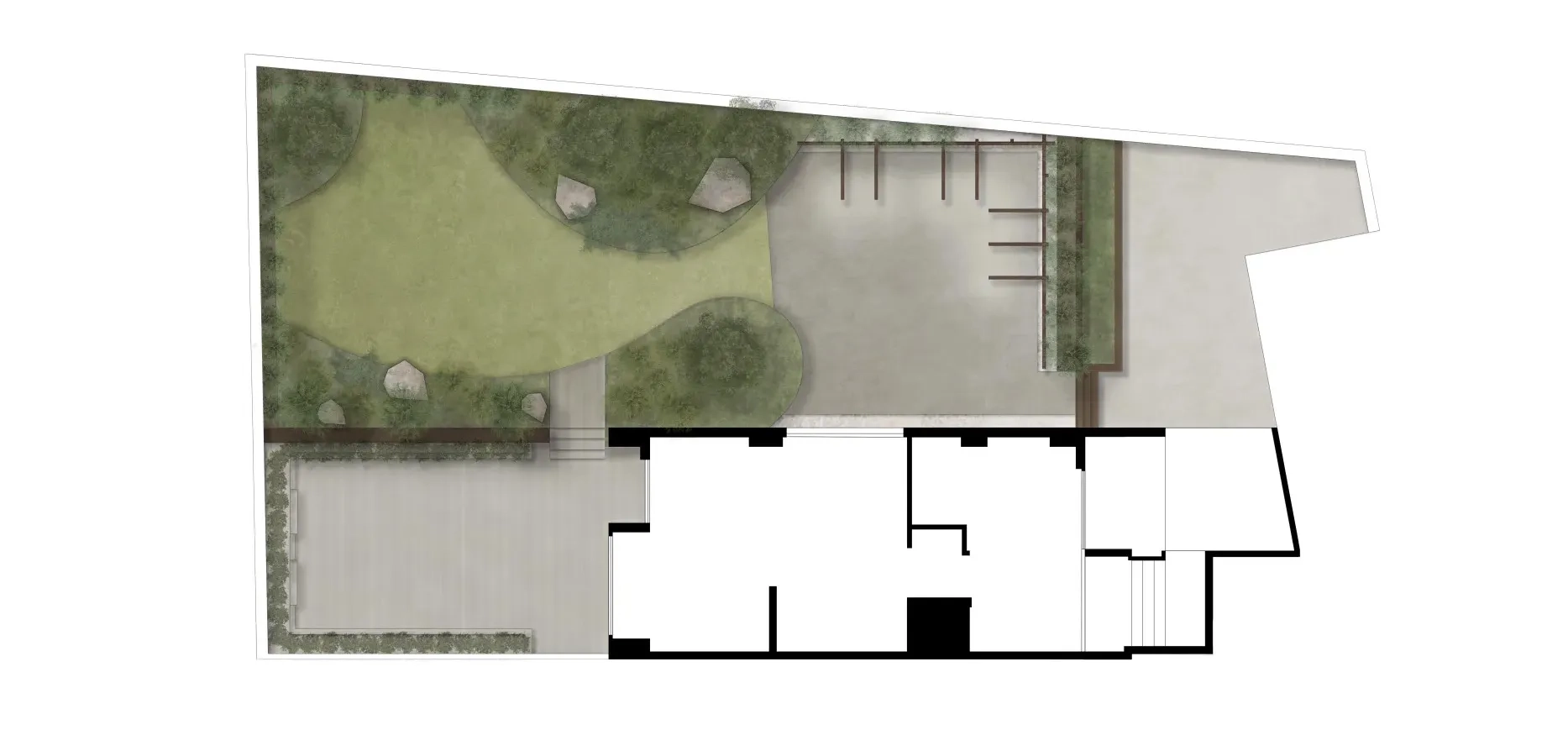
Designing a small garden is an exercise in simplification and careful selection of elements. The choice of plants, paving and furniture must be thoughtfully planned and executed, resulting in a space that is aesthetically coherent. In many cases, designing a small garden represents a challenge for landscape architects. The Japanese architect and theorist Kengo Kuma argues that a reduced space fosters intimacy and a closer interaction with nature.

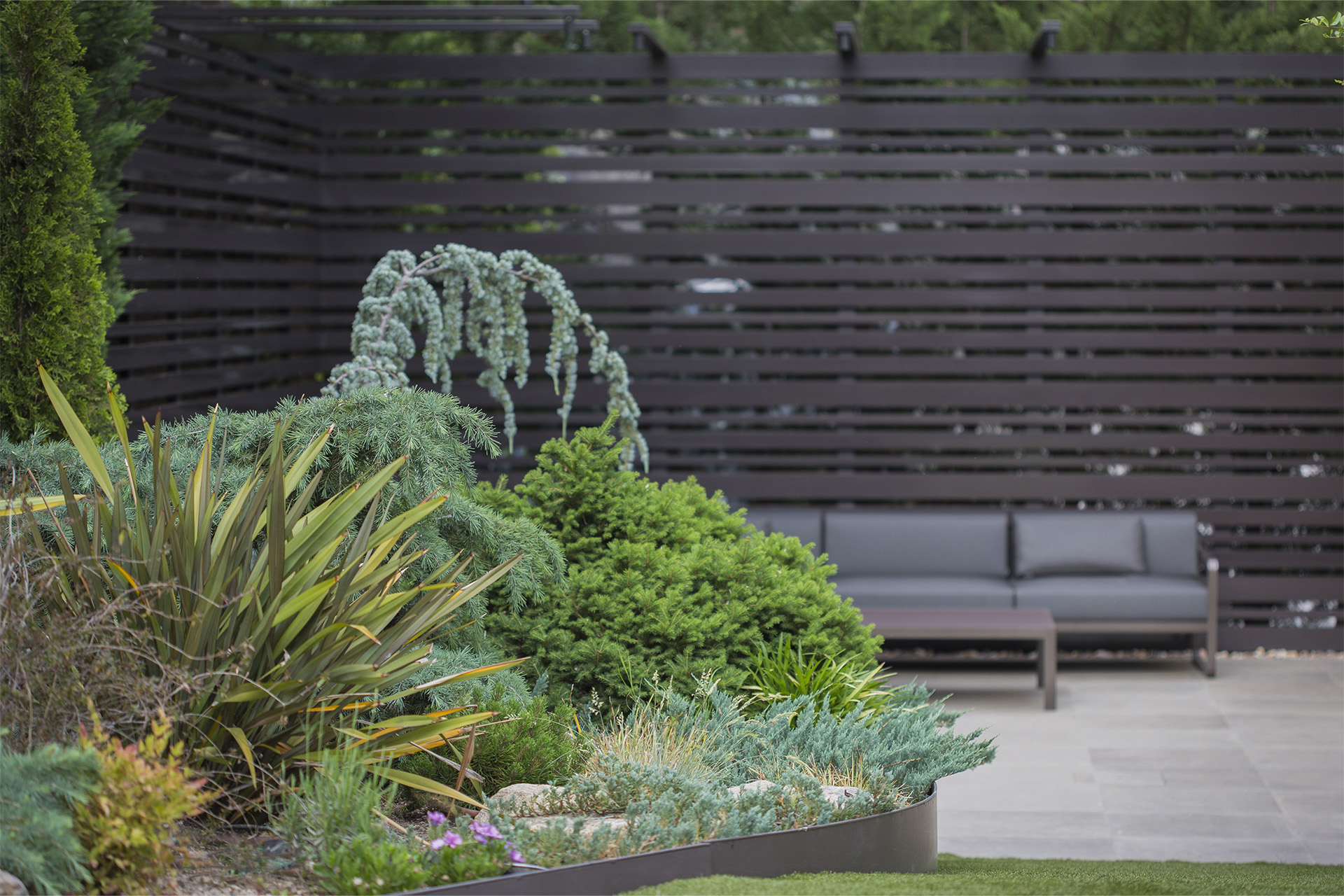

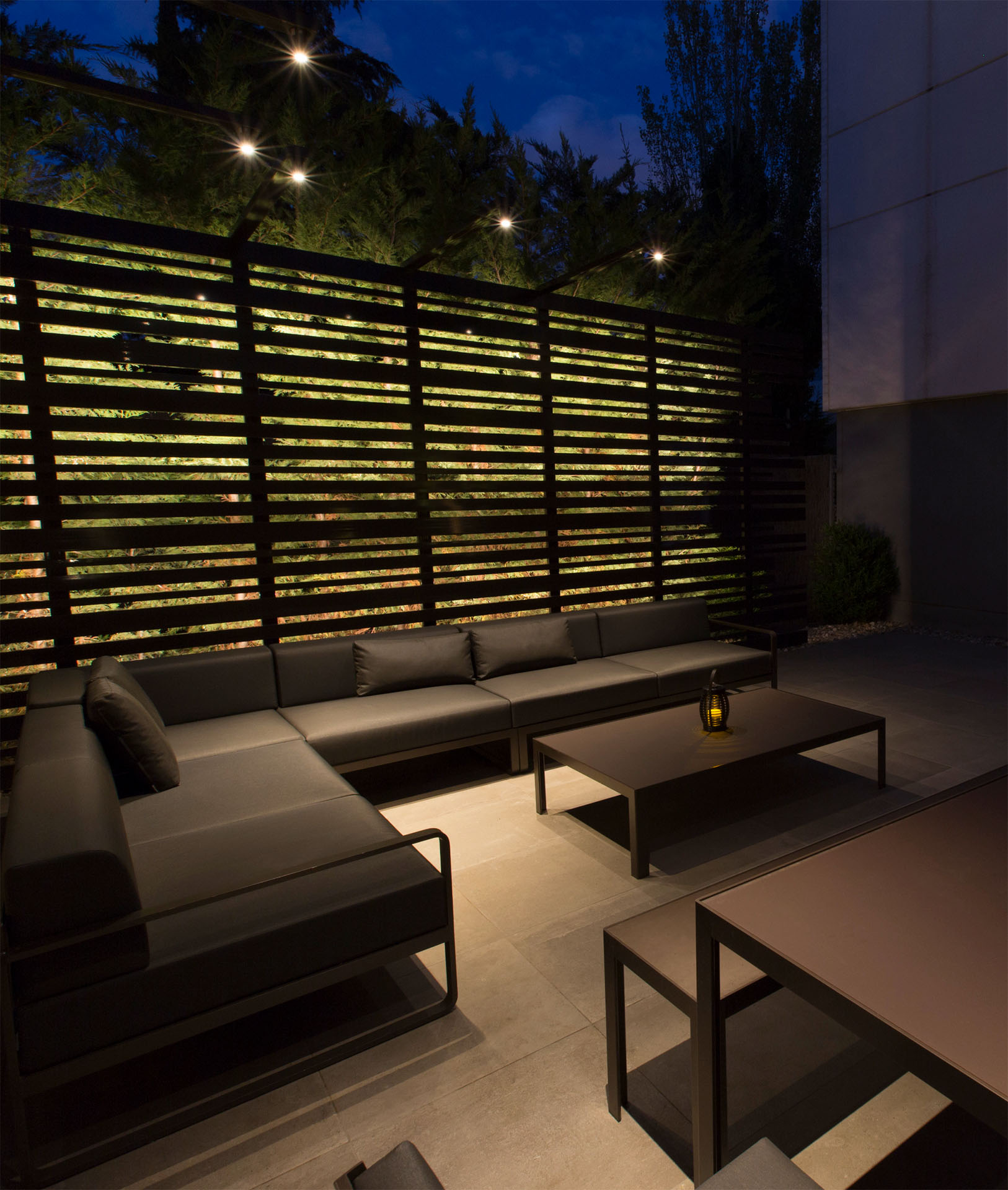
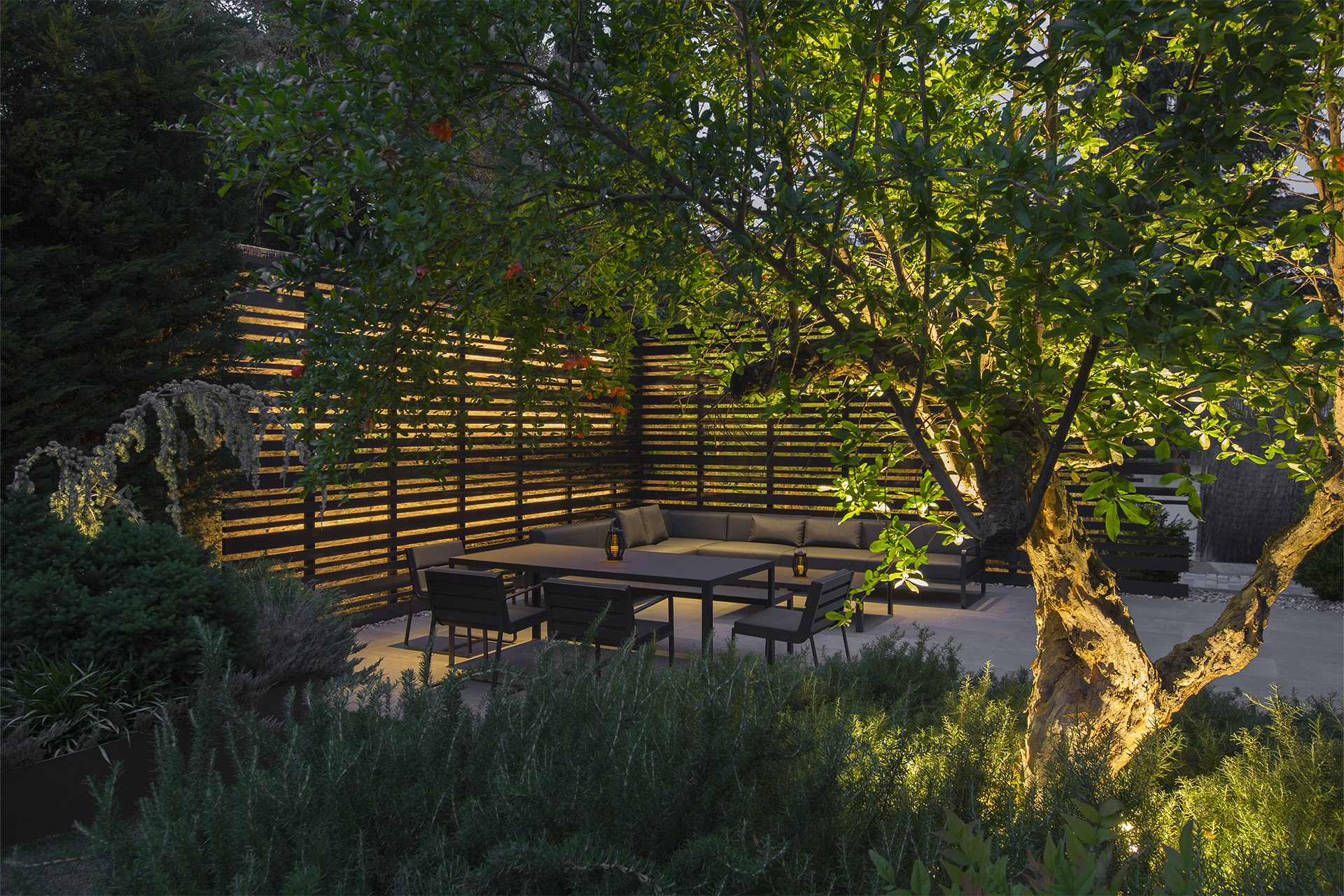
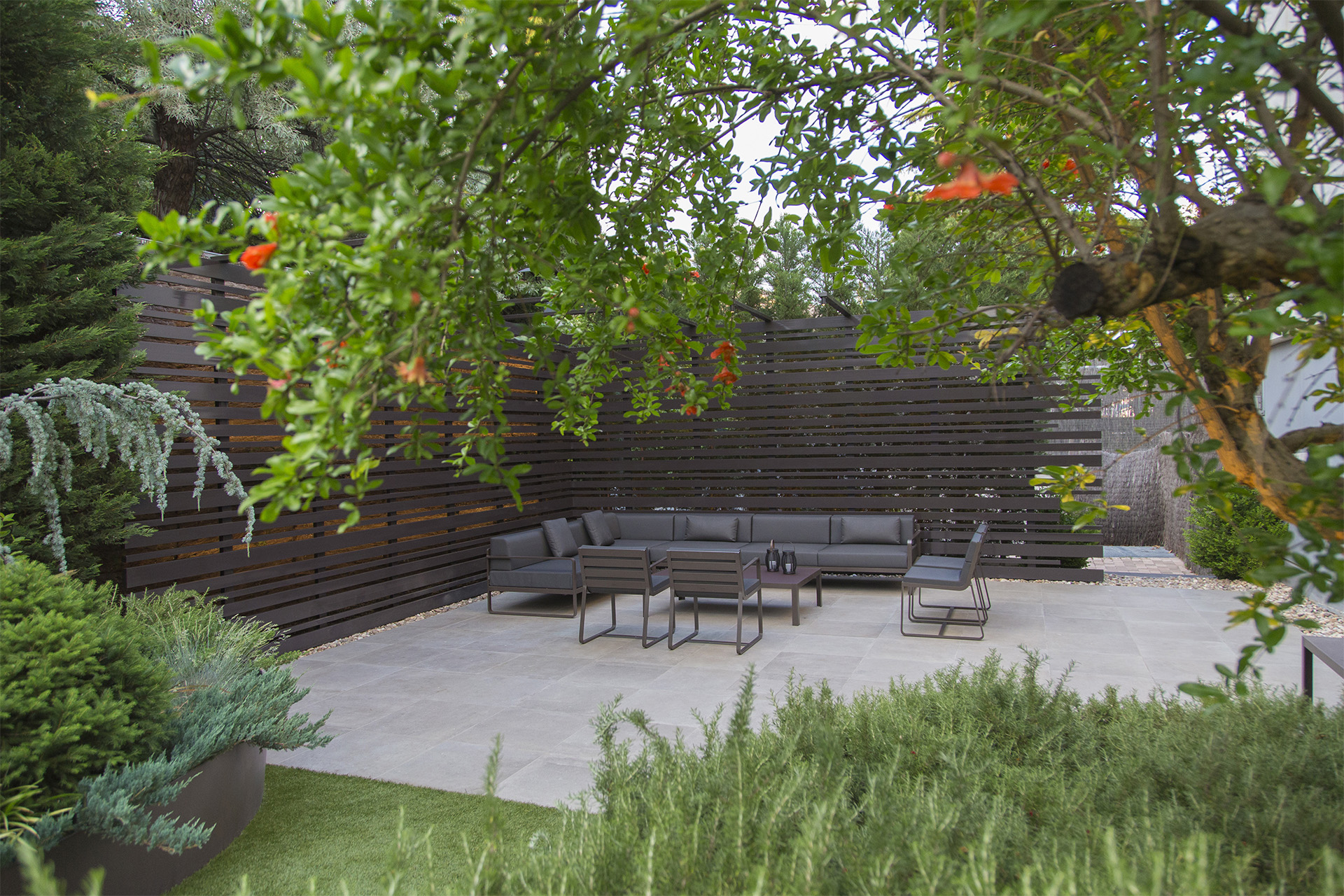
This project addresses the design of a small-scale garden, organised into three clearly differentiated sectors. The central element functions as a distribution space, articulating circulation and connecting the various seating areas that allow for diverse uses within a contained surface.
Working in small spaces requires particular precision. Proportion, scale and perception become more relevant than in larger gardens. Here, the objective was to create a welcoming and protected atmosphere, where the user experiences intimacy without a sense of confinement. To achieve this, vertical elements were reinforced through components specifically designed for the project, such as the lattice, which introduces rhythm, depth and visual control.
The design was conceived in an integral manner. Lighting, furniture, decoration, planting and materials were developed simultaneously, ensuring complete coherence among all elements. The luminaires, designed by our studio, not only resolve functional requirements but also help shape the garden’s nocturnal atmosphere, extending its use and enhancing its spatial perception.
ABOUT KENGO KUMA
Kengo Kuma is one of the most influential Japanese architects of our time. Born in 1954, he has developed a body of work that moves away from rigid monumentality and embraces a light, almost ethereal architecture, deeply connected to nature and to Japanese building traditions.
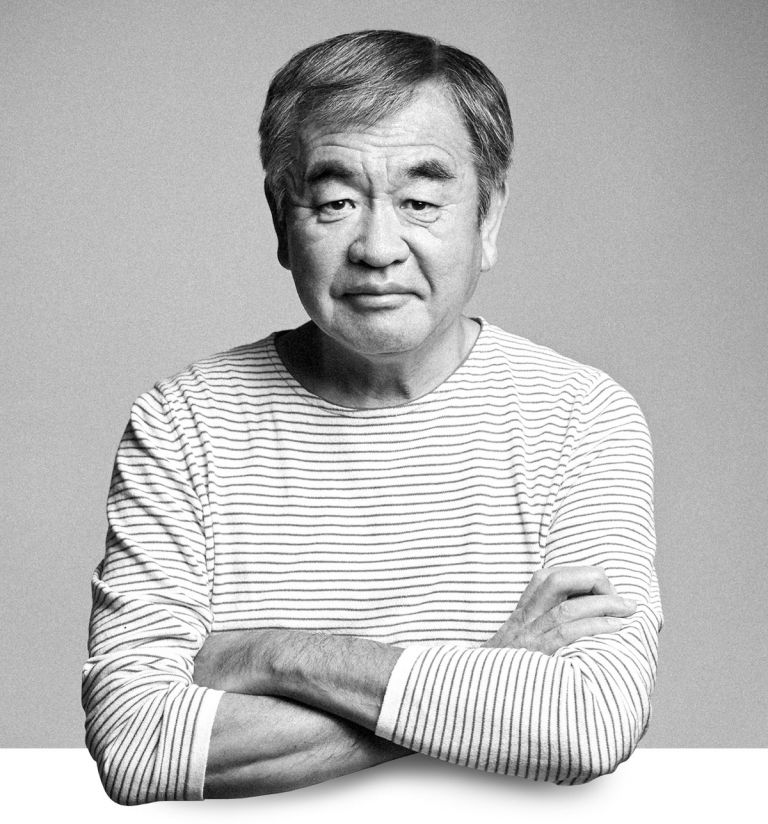 | His work is characterised by the delicate use of materials such as wood, stone and bamboo, reinterpreted through contemporary technology. Rather than imposing bold, heavy structures, Kuma seeks to dissolve architecture into the landscape, fragmenting it and making it permeable to light, air and sensory experience. Rather than creating iconic objects, his architecture builds atmospheres: spaces that breathe, filter light and engage in dialogue with their surroundings. His work reminds us that true modernity is not always loud or monumental, but can instead be quiet, precise and profoundly human. |