A garden in Madrid with sport as the protagonist
Date
2025-2026
Location
Madrid (Spain)
Type
Residential
Trees
210
Area
10.000 m²
Status
Construction
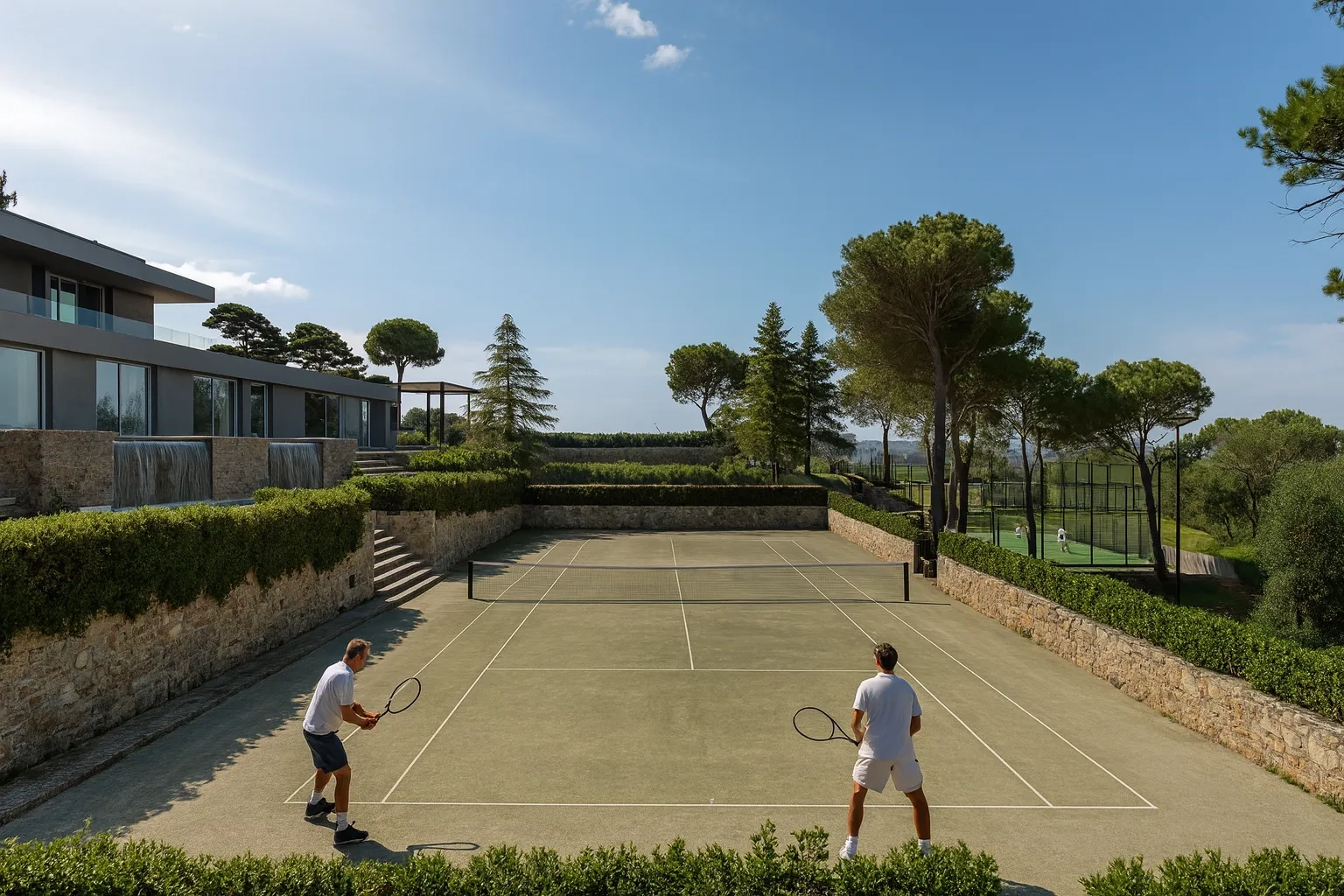
The garden, conceived for a large residence in Madrid, is not merely a backdrop. It is a mosaic of programmes –sports courts, pavilion, swimming pool, children’s area– responding to multiple ways of living and enjoyment. Our proposal transforms it into a living organism, a rhizome that connects and structures without hierarchies, integrating the aesthetic with the functional.
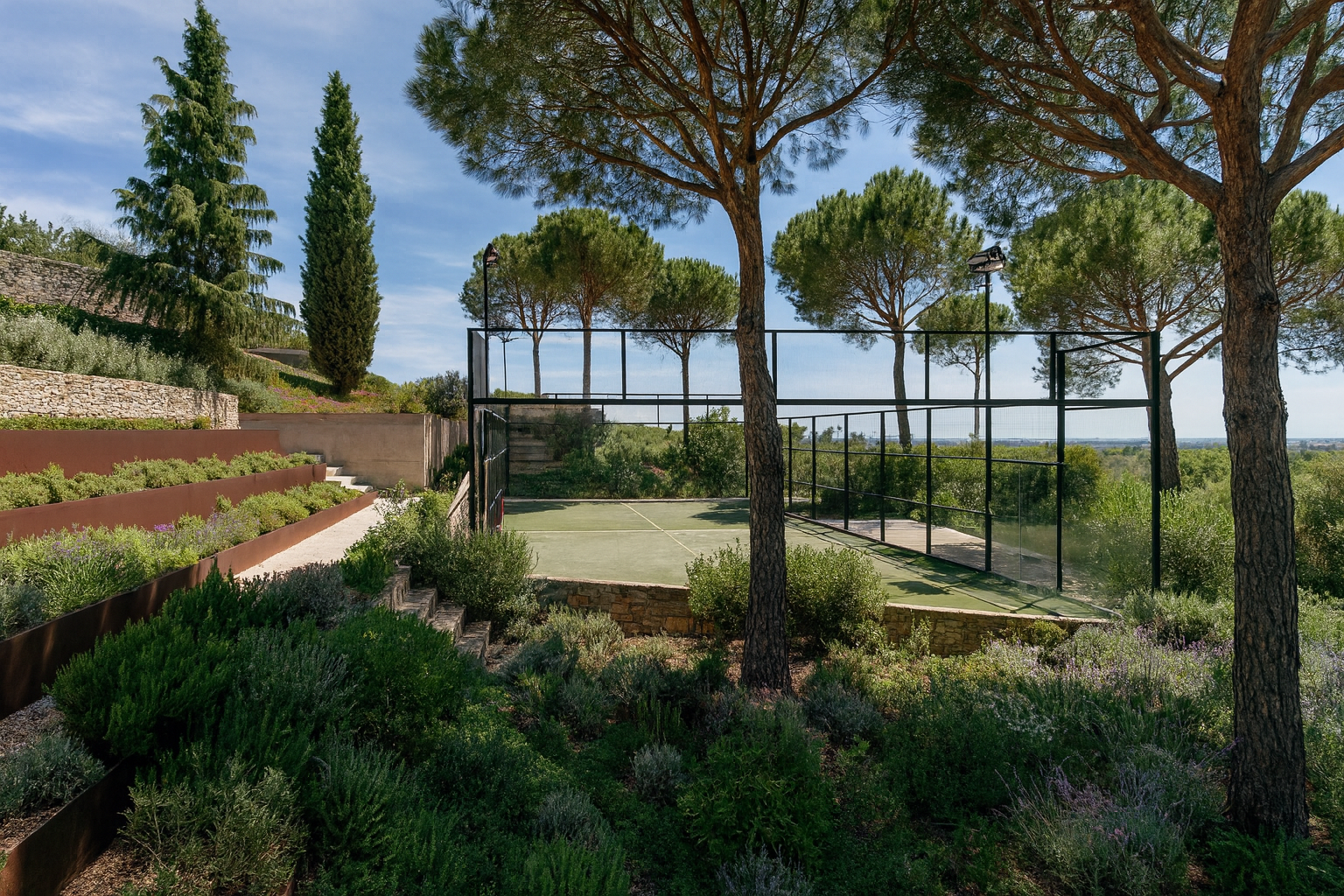
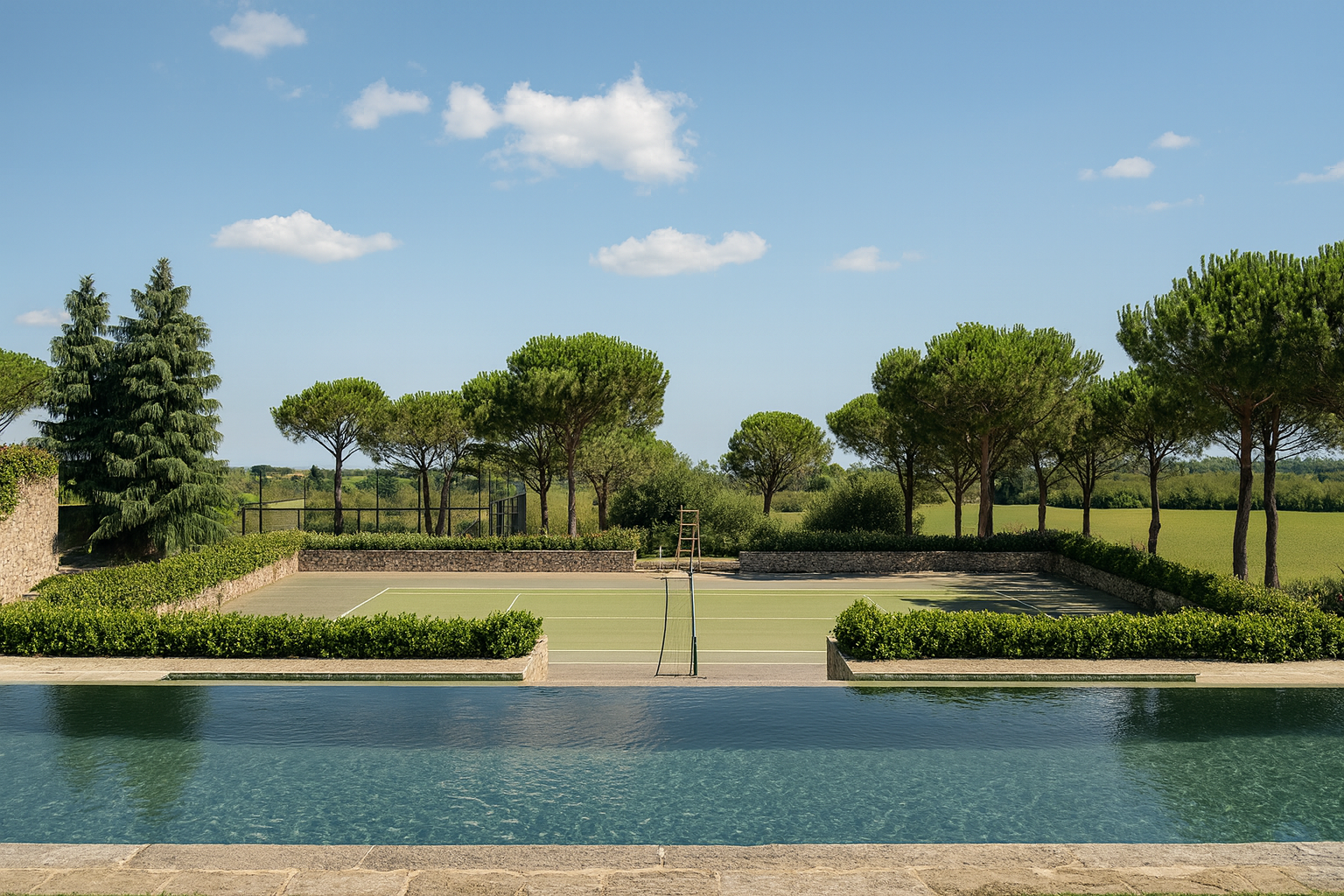
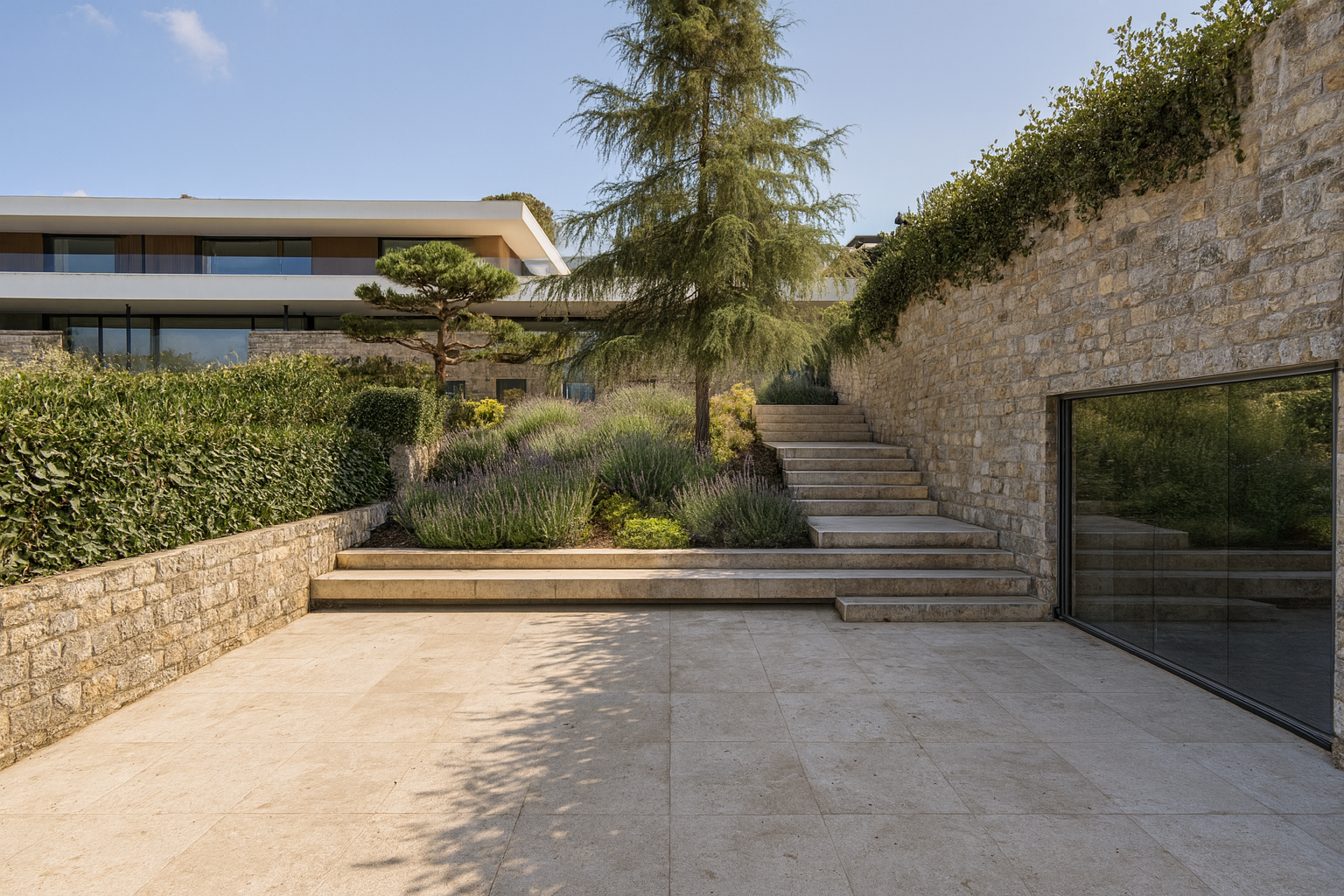
Throughout history, gardens have been far more than settings for aesthetic contemplation. From their origins, they have accommodated programmes of leisure, spectacle and sociability that turned them into true stages of life. In the seventeenth-century French garden, André Le Nôtre designed at Versailles not only a geometric display of control over nature, but also a framework for the representation of power and courtly entertainment: promenades, festivities, open-air theatrical performances and water displays that transformed gardening into scenography. In the eighteenth century, the Royal Palace of La Granja de San Ildefonso, under Philip V, continued this tradition with its celebrated play of fountains, conceived for the delight of the court through ingenious hydraulic effects that surprised and entertained visitors.
Similarly, in England, eighteenth-century landscape gardens incorporated elements intended to provoke wonder and sensory experience: artificial ruins, temples or pavilions that evoked the journeys of the Grand Tour. In some cases, so-called hermits were even hired—figures who lived in huts or hermitages within the garden as part of a living theatre for guests. In all these cases, the garden emerges as a hybrid space: at once poetic and playful, aesthetic and functional.
In this contemporary garden project of more than 10,000 m2, that tradition is reinterpreted in a family-oriented key. The garden is conceived as a fabric where sporting and recreational programmes —swimming pool, tennis and padel courts, football field, leisure pavilion— coexist with a natural woodland of pines and holm oaks. The challenge, as in past eras, lies in ensuring that the whole maintains a unified and poetic character, where nature and artifice are reconciled to create a shared stage for everyday life.
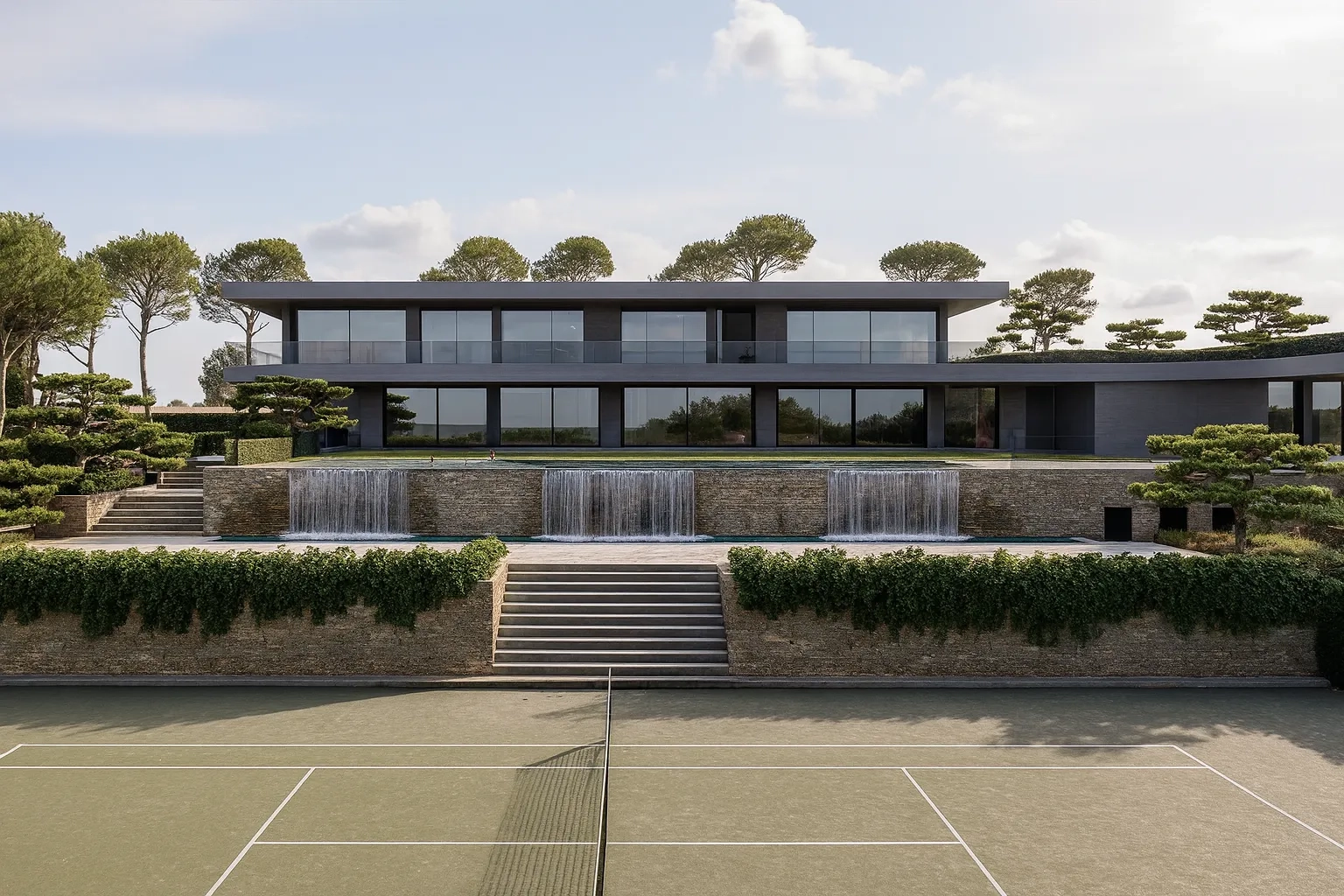
The project unfolds on a large plot where the architecture places the house in an elevated position in relation to the terrain. Against this familiar vertical hierarchy —the house above as the centre and the garden as a secondary plane— our proposal seeks to invert the logic: the garden does not simply accompany the architecture, but becomes a horizontal fabric where all uses acquire the same level of relevance.
Inspired by the ideas of Deleuze and Guattari on the rhizome and by the contemporary landscape vision of James Corner, the design is conceived as a network of connections rather than a hierarchical scheme. The sports courts, the swimming pool with a lap lane, the outdoor pavilion, the play areas and the living spaces are not subordinated to the house; instead, they are linked to one another through paths, vegetation and spatial sequences that integrate them into a common system.
The garden merges with the natural context of holm oaks and pines, establishing a continuous gradient that avoids the classic division between ornamental areas close to the house and woodland areas towards the perimeter. Here, everything participates in the same horizontal logic: the domestic, the recreational, the functional and the aesthetic all form part of a single organism.
From a technical perspective, the challenge has been to respond to a wide diversity of demands without fragmenting the space. The solution has been to design a unified landscape in which the different programmes merge into a coherent whole. The result is a contemporary garden that transcends the condition of a backdrop to become a living structure —a rhizome of connections that transforms a multiplicity of uses into a shared experience.
ABOUT DELEUZE AND GUATTARI
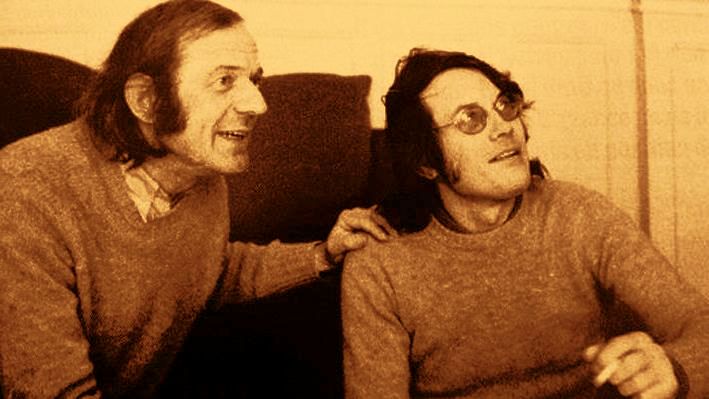
Gilles Deleuze (French philosopher) and Félix Guattari (psychoanalyst and political thinker) published at the end of the twentieth century two books that became key references in contemporary thought: Anti-Oedipus (1972) and A Thousand Plateaus (1980), brought together under the common title Capitalism and Schizophrenia. In these works they proposed a radical critique of the rigid and hierarchical structures of society, suggesting new ways of understanding organisation, the production of knowledge and human connections.
One of their most influential concepts is that of the rhizome, borrowed from botany: an underground system in which shoots and roots spread without a single centre or fixed hierarchy. For Deleuze and Guattari, the rhizome symbolises a way of thinking and organising the world based on multiplicity, connection and horizontality, in contrast to pyramidal or tree-like structures that impose a vertical order.
These ideas have resonated strongly in contemporary urbanism and landscape architecture. James Corner, one of the most influential landscape architects of recent decades, incorporated the concept of the rhizome into his vision of urban and natural spaces. His projects understand landscape as a network of dynamic relationships, where ecological, social and aesthetic dimensions intertwine without rigid hierarchies. Examples such as the High Line in New York demonstrate how a space can function as a rhizome: connecting people, memories, infrastructures and nature within an open system.
By applying these ideas to our garden, we pursue the same principle: that no single centre exists, but rather multiple connections. The result is a living space in which architecture, sport, leisure and nature coexist as parts of the same rhizome.